The feature
The Cybersecurity Companies Every CISO Should Watch In 2027
26 security companies whose 2026 launches, funding and research point at where CISO budgets go in 2027: AI agents, identity, exposure, cloud, AppSec and response, A to Z.
- Companies, A to Z
- 26
- Milestones on record
- 113
- Themes for 2027 budgets
- 6
In this feature · 5 sections
Every year has a security story that only becomes obvious afterwards. The one taking shape for 2027 is already visible in what vendors shipped in 2026: software agents that act on their own are moving from pilots into production, and almost every control a CISO owns is being rebuilt around that fact. Identity has to cover things that are not people. Exposure programs have to prove that a finding can actually be exploited before anyone spends a sprint on it. Incident response has to assume the attacker may also be running an agent. Sygnia says its incident response projects rose about 40% from the first half of 2025 to the first half of 2026, and Orchid Security's telemetry study found that identity outside the view of IAM tools now outweighs the identity those tools can see, 57% to 43%.
This feature looks at 26 companies whose 2026 work points at where those budgets will go next year. Some are large: Cato Networks says it passed $415 million in annual recurring revenue with more than 4,800 customers, and Axonius says it passed $200 million with nearly 1,000 customers. Some came out of stealth this year with a single product and a sharp thesis. All of them published something dated in the past twelve months that a security team can check for itself.
The companies are listed alphabetically. Each section gives the basic record, what the company sells in plain terms, what it did in 2026 and why that matters for 2027, and one question worth putting to its team in a demo.
How the list was built
Every company in this feature meets three tests.
First, it has at least one dated milestone between November 2025 and November 2026 that can be read on a primary page: a funding round, a product launch, an acquisition, a named customer, a research publication or a listing in an analyst report. Across the 26 companies, the research desk recorded 113 such milestones.
Second, it sells a product or service that a CISO buys, runs or answers for. Platforms sold mainly to developers or IT teams count when the security team owns the outcome, as with application security testing or asset inventory.
Third, its work maps to at least one of six problems that will shape security programs in 2027: AI agent and usage security, identity and non-human identity, exposure management, cloud and network security, application security, and readiness and response.
The facts come from each company's own pages, its press releases, and coverage in established trade and business press. Every fact in the text carries the passage it rests on, and every passage was read again on its live page on 6 November 2026. Where a figure is the company's own claim, such as revenue, growth or a detection rate, the text says so. Founding years and headquarters are given only where a primary page states them.
The list at a glance
The 26 companies span six themes, and most of them work in more than one. AI agent and usage security is the thread that runs furthest: 12 of the 26 companies shipped something for it in 2026, even when their main product is something else.
Source: CISO Tribune research: company pages, releases and trade press read 6 Nov 2026
| Label | companies |
|---|---|
| AI agents and AI use | 12 |
| Identity and NHI | 5 |
| Exposure management | 8 |
| Cloud and network | 6 |
| Application security | 3 |
| Readiness and response | 9 |
Counting only each company's main theme gives a more even spread: cloud and network, exposure management, and readiness and response have six companies each, and only Bay has AI agent security as its main business.
Source: CISO Tribune research: company pages, releases and trade press read 6 Nov 2026
| Label | companies |
|---|---|
| AI agents and AI use | 1 |
| Identity and NHI | 4 |
| Exposure management | 6 |
| Cloud and network | 6 |
| Application security | 3 |
| Readiness and response | 6 |
The year's activity built through 2026. The third quarter carried the most milestones, several of them launches timed to Black Hat USA in August, and the fourth quarter had already logged 18 by the first week of November.
Source: CISO Tribune research: company pages, releases and trade press read 6 Nov 2026 · The 2025 Q4 bar counts November and December 2025 only; 2026 Q4 runs to 6 November.
| Label | milestones |
|---|---|
| 2025 Q4 | 4 |
| 2026 Q1 | 18 |
| 2026 Q2 | 27 |
| 2026 Q3 | 46 |
| 2026 Q4 | 18 |
Launches dominate the record. Partnerships and research publications come next, which says something about how these companies compete: by publishing their own findings and wiring themselves into the platforms customers already run.
Source: CISO Tribune research: company pages, releases and trade press read 6 Nov 2026
| Label | milestones |
|---|---|
| Product launches | 54 |
| Partnerships | 18 |
| Research publications | 18 |
| Analyst report listings | 9 |
| Funding rounds | 7 |
| Customer disclosures | 5 |
| Acquisitions | 2 |
Activity is uneven. Some companies shipped something almost every month; others put out one or two large announcements.
Source: CISO Tribune research: company pages, releases and trade press read 6 Nov 2026
| Label | milestones |
|---|---|
| Act Security | 5 |
| Axonius | 11 |
| Bay | 2 |
| Cato Networks | 10 |
| Checkmarx | 7 |
| Corelight | 4 |
| Cymulate | 3 |
| Finite State | 3 |
| IONIX | 3 |
| Keepit | 4 |
| Legit Security | 5 |
| Lookout | 4 |
| Mars Security | 2 |
Source: CISO Tribune research: company pages, releases and trade press read 6 Nov 2026
| Label | milestones |
|---|---|
| Mate Security | 5 |
| NewCore | 2 |
| Nucleus Security | 3 |
| Orca Security | 5 |
| Orchid Security | 6 |
| Reflex Security | 1 |
| Rival Security | 4 |
| Scytale | 3 |
| Sentra | 4 |
| Sygnia | 7 |
| Token | 3 |
| TXOne Networks | 3 |
| Veriff | 4 |
Most of the companies are young. Where a primary page states a founding year, the median is 2016, and five were founded in 2019 or later.
Source: CISO Tribune research: company pages, releases and trade press read 6 Nov 2026 · 11 of the 26 companies do not state a founding year on a primary page.
| Label | companies |
|---|---|
| 2006 | 1 |
| 2007 | 1 |
| 2014 | 1 |
| 2015 | 3 |
| 2016 | 2 |
| 2017 | 2 |
| 2019 | 1 |
| 2021 | 2 |
| 2025 | 2 |
Eleven of the companies give a headquarters in the United States and seven in Israel, with one each in Denmark, Estonia and Taiwan; the rest do not state one on a primary page.
Source: CISO Tribune research: company pages, releases and trade press read 6 Nov 2026
| Label | companies |
|---|---|
| United States | 11 |
| Israel | 7 |
| Denmark | 1 |
| Taiwan | 1 |
| Estonia | 1 |
| Not stated | 5 |
Money followed the themes. The equity rounds announced since November 2025 went to identity for AI agents, AI security operations, cloud access, exposure management and data security.
Source: CISO Tribune research: company pages, releases and trade press read 6 Nov 2026 · Debt facilities are left out.
| Label | $ million |
|---|---|
| Mate Security, Seed | 15.5 |
| Act Security, Series A | 40 |
| Nucleus, Series C | 20 |
| NewCore, Seed | 66 |
| Mate Security, Series A | 35 |
| Sentra, strategic | 150 |
Source: CISO Tribune research: company pages, releases and trade press read 6 Nov 2026 · Only rounds with a stated amount and date on a primary page; debt left out.
| Label | $ million |
|---|---|
| 2019 | 6.5 |
| 2020 | 88 |
| 2021 | 550 |
| 2022 | 100 |
| 2023 | 40 |
| 2024 | 316 |
| 2025 | 550.5 |
| 2026 | 271 |
Customer evidence is thinner than product news. Most of the companies name a handful of customers on their own pages or in releases, and nine name none at all, which is common for young companies selling to security teams that prefer not to be named.
Source: CISO Tribune research: company pages, releases and trade press read 6 Nov 2026
| Label | companies |
|---|---|
| 0 | 9 |
| 1 | 6 |
| 2 | 4 |
| 3 | 1 |
| 4 | 1 |
| 5 or more | 5 |
The companies, A to Z
Act Security
Based Tel Aviv, Israel. Category Cloud identity entitlements (CIEM). Themes Cloud and network; identity and non-human identity. Milestones on record 5.
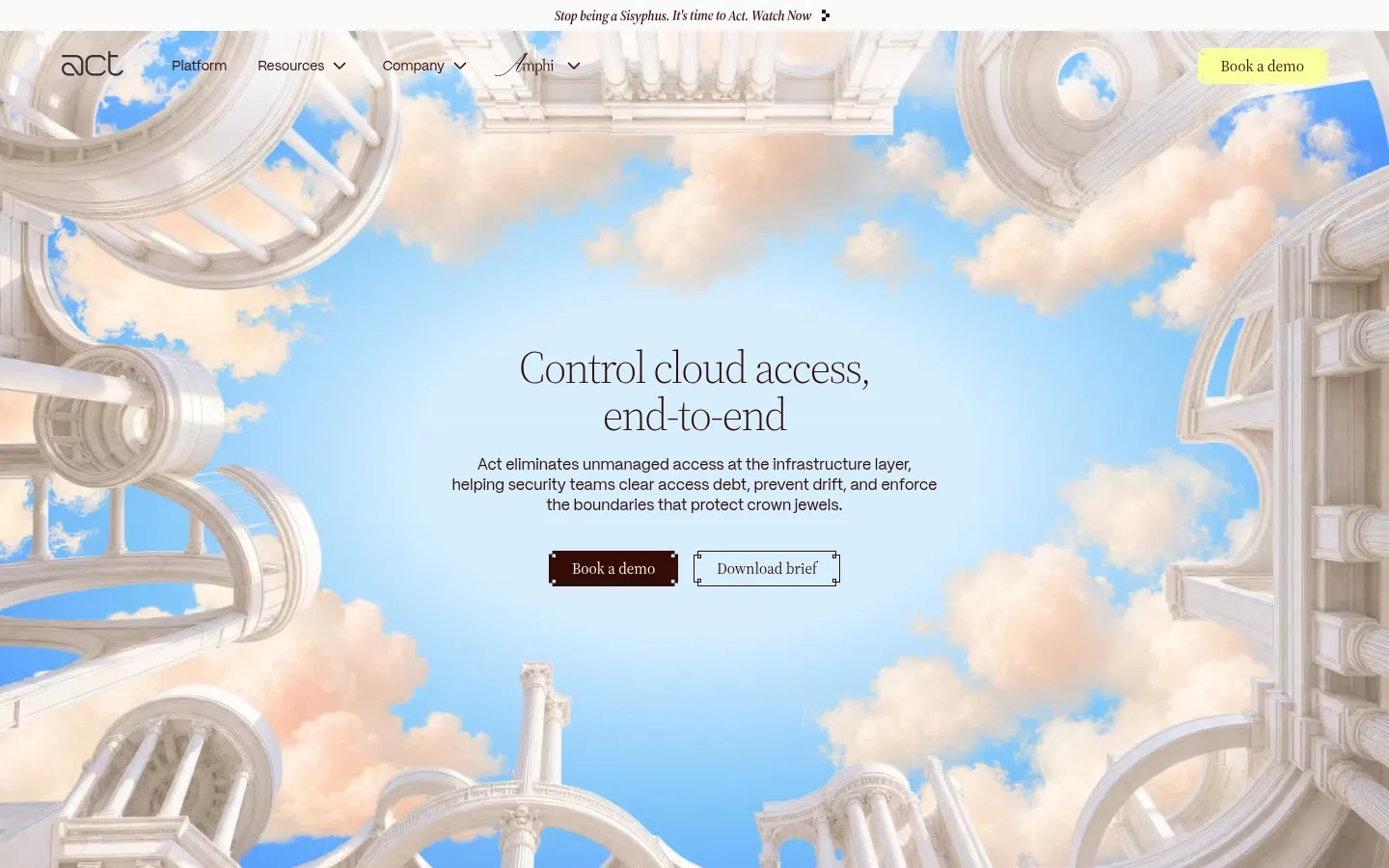
Act Security works on a common cloud problem: access that piled up and never left. It removes excess access across a company's cloud to close the attack paths breaches rely on, and before it enforces a change it tests that change against a digital twin of the environment to show what it would block. That second step matters, because fear of breaking production is what keeps standing privileges in place.
Act raised a $40 million Series A led by Notable Capital four months after a $20 million seed, and came out of stealth in July 2026 with $60 million across both rounds. In September it released Amphi, a free toolkit for cloud access policies, built on Cloud Copilot, an open-source AWS access tool Act had just acquired. In October it published a case study with HUB International on running AI coding agents in cloud sandboxes on AWS. As agents get their own cloud permissions in 2027, proving that removing access is safe becomes a requirement.
Ask in the demo: Act tests every change against a digital twin before enforcing it: what data builds that twin and how far back does it go, and how does it treat rarely used access such as break-glass roles that the history barely shows?
Read more: Act Security on CISO Tribune, the spotlight, act.security
Axonius
Founded 2017. Based New York, United States. Category Cyber asset inventory (CAASM). Themes Exposure management. Milestones on record 11.
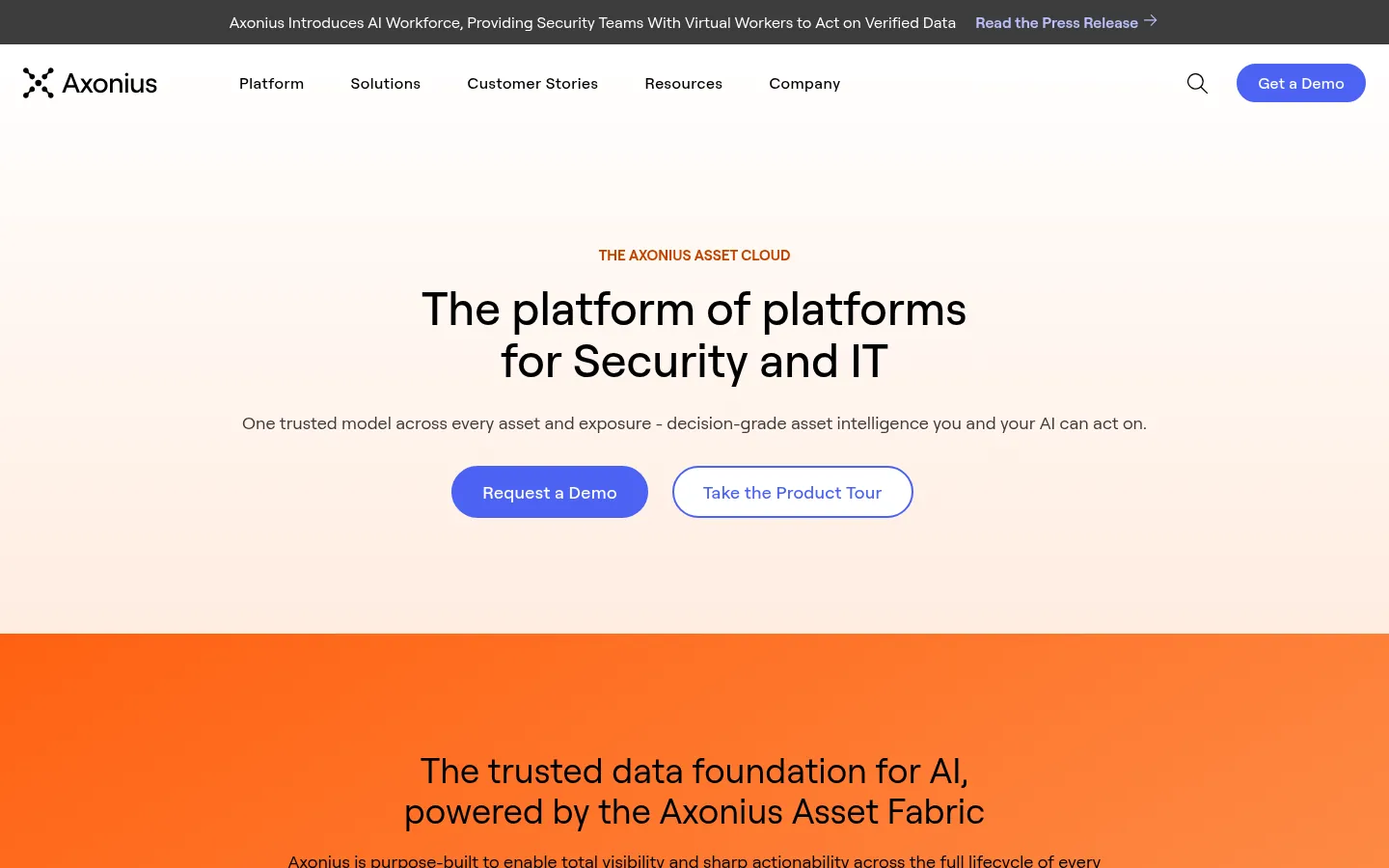
Axonius built its business on an unglamorous but universal problem: security and IT tools disagree about what a company owns. The Axonius Asset Cloud keeps one record of every asset and exposure, reconciling conflicting data from the tools teams already run through more than 1,400 two-way integrations.
The company said in May 2026 that it had passed $200 million in annual recurring revenue and served nearly 1,000 customers. The rest of its year was about turning that inventory into something agents can act on. It launched an AI agent and an MCP server that connect asset data to enterprise AI tools, signed a strategic collaboration agreement with AWS on agentic AI and asset intelligence, and in October introduced AI Workforce, with more than 50 types of virtual workers. The same month it added discovery and governance of shadow AI, treating AI as an asset class, and made its IoT and OT product generally available. For 2027 the value is plain: before anyone can govern AI tools or agents, someone has to know they exist.
Ask in the demo: Axonius says its job is reconciling tools that disagree. Pick an asset where our scanner and our EDR conflict, show which record the Asset Cloud keeps and why, and show which of the 50+ AI Workforce virtual workers may act on it without a person approving.
Read more: Axonius on CISO Tribune, the spotlight, axonius.com
Bay
Category AI model and agent security. Themes AI agent and usage security. Milestones on record 2.
Bay works at the last point where a security team can stop an AI agent: the endpoint, before the action runs. It blocks dangerous agent actions there, judging each one against session context such as identity, prior actions and data touched, and returning Allow, Ask or Deny in real time. It deploys through the EDR or MDM a company already runs, with no new agent to install, and records who triggered each agent action, from the prompt to the system action.
Bay's 2026 output was research. In April it showed that the Claude browser extension links a corporate and a personal device signed into the same account, and in August it analysed Ghostjacking, an indirect prompt-injection attack on trusted AI agents, and how runtime enforcement stops it. Beazley Security is named as a customer. Coding agents and desktop assistants already run on employee laptops with the user's own permissions; in 2027 the question of who stops a bad action before it happens will land on the endpoint team. Bay's product works at that point, judging each agent action before it runs.
Ask in the demo: Bay deploys through our existing EDR or MDM and returns Allow, Ask or Deny on every agent action in real time: what happens to an agent's action when Bay cannot reach its policy engine, and who answers an Ask prompt at 2 a.m.?
Read more: Bay on CISO Tribune, bay.io
Cato Networks
Founded 2015. Based Tel Aviv, Israel. Category SASE and SSE. Themes Cloud and network; ai agent and usage security. Milestones on record 10.
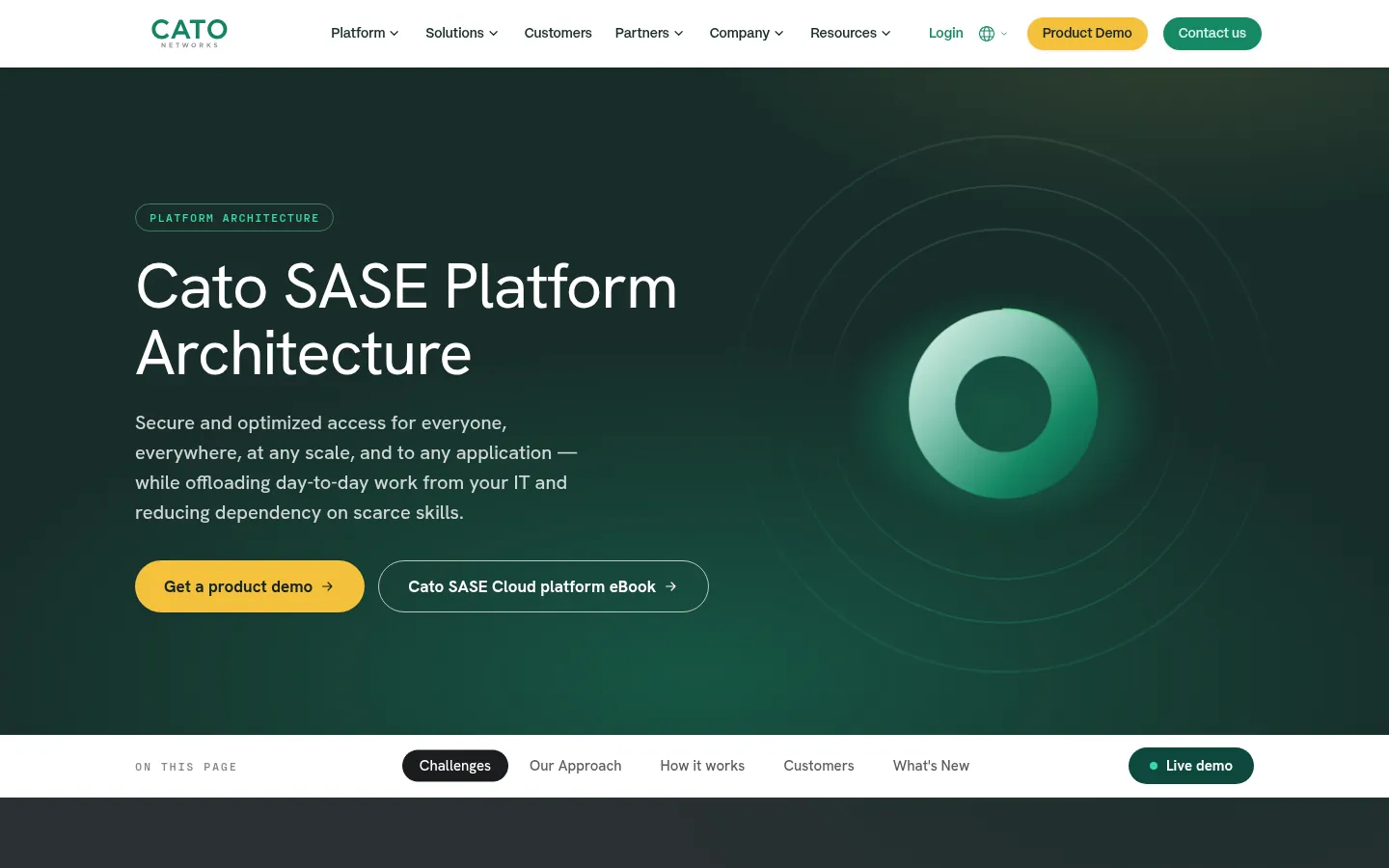
Cato Networks sells networking, security and access as one cloud service, and since March 2026 customers can adopt it module by module. It is one of the largest companies on this list: Cato says it passed $415 million in annual recurring revenue, growing 42%, with more than 4,800 customers. Darling Ingredients replaced three networking and security vendors with it this year.
In 2026 Cato turned hard towards AI traffic. Cato Neural Edge puts NVIDIA GPUs across its private backbone for real-time AI inspection. Cato AI Security brings in the governance and protection of Aim Security, which Cato acquired. In October it launched Cato AI Endpoint, for AI use in browsers, desktop apps and local agents. The company also says its agentic CVE mitigation protects customers from newly disclosed vulnerabilities within 45 minutes, and it partnered with CrowdStrike to join network and endpoint security operations. For CISOs consolidating vendors, the network edge is becoming the place where AI use is seen and stopped.
Ask in the demo: Cato AI Endpoint is sold as working alongside our existing tools: show a local coding agent on a laptop calling an outside AI service, which Cato policy stops it, and whether the same rule also applies when that user's traffic runs through the SASE platform.
Read more: Cato Networks on CISO Tribune, the spotlight, catonetworks.com
Checkmarx
Founded 2006. Category Static application security testing. Themes Application security; ai agent and usage security. Milestones on record 7.
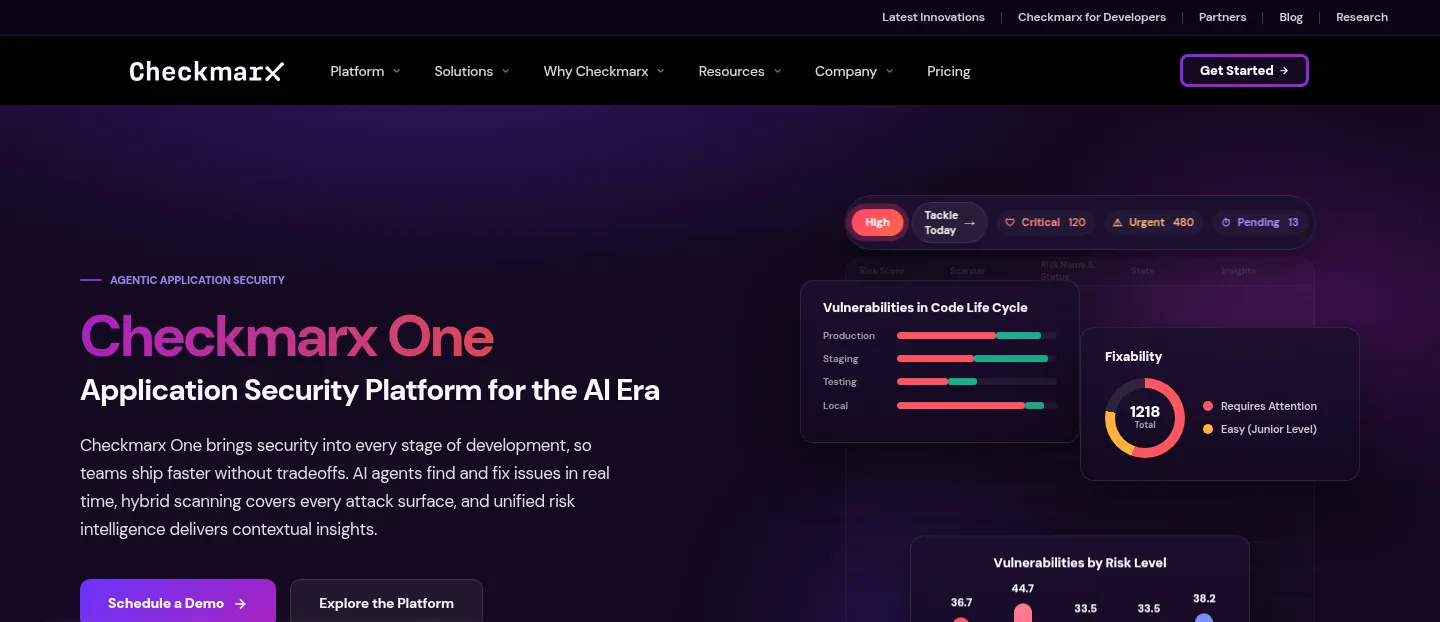
Checkmarx, founded in 2006, sells Checkmarx One, an application security platform that covers every stage of development. Its 2026 work is a clear picture of AppSec adjusting to AI-written code. Developer Assist fixes risky code as AI coding assistants generate it, with plugins for Claude Code CLI, Copilot CLI and Cursor CLI. In June it made AI Inventory generally available to track AI assets in the software supply chain, and in July it introduced self-healing application security in its Assist agent family.
The larger bet is Checkmarx Fusion, hybrid scanning that pairs Checkmarx's engines with Anthropic frontier models, in early access since July. Checkmarx also joined Anthropic's Project Glasswing for defensive vulnerability work and the Claude Marketplace, which lets Anthropic customers apply spend commitments to Checkmarx One. For public-sector buyers, Checkmarx One for Government reached FedRAMP Moderate in July. In 2027 the AppSec question becomes how human review, scanning engines and models divide the work, and Checkmarx is testing one answer in production.
Ask in the demo: Checkmarx Fusion pairs its scanning engines with Anthropic models: on our own code, show which findings came from the engine and which from the model, how a model-only finding is verified before it reaches a developer, and what source code leaves our environment.
Read more: Checkmarx on CISO Tribune, checkmarx.com
Corelight
Founded 2016. Based San Francisco, United States. Category Network detection and response. Themes Cloud and network; readiness and response. Milestones on record 4.
Corelight, founded in 2016, turns network traffic into evidence that feeds AI-driven detection and analyst workflows. It sells an open-core network detection and response platform with AI detection and agentic triage, and its Smart PCAP keeps only the packets an investigation needs, so months of traffic history can be stored.
In March 2026 it launched an agentic AI suite to automate repetitive SOC tasks, and in September it released new AI SOC and AI threat detection capabilities. It was listed on the FedRAMP Marketplace as In Process at the Moderate level in June and set up Corelight Canada in October for Canadian government, defence and critical-infrastructure customers. When an investigation has to establish what an agent or an attacker actually did on the wire, stored packets settle arguments that summaries cannot, which is why the network sensor is regaining a place in 2027 SOC budgets.
Ask in the demo: Corelight says Smart PCAP stores months of traffic history and its agentic triage automates tier-1 work: in the demo, take one alert from detection to the stored packets that prove it, and show what the agent did on its own versus what an analyst approved.
Read more: Corelight on CISO Tribune, corelight.com
Cymulate
Founded 2016. Based Tel Aviv, Israel. Category Breach simulation and automated pen-testing. Themes Exposure management; readiness and response. Milestones on record 3.
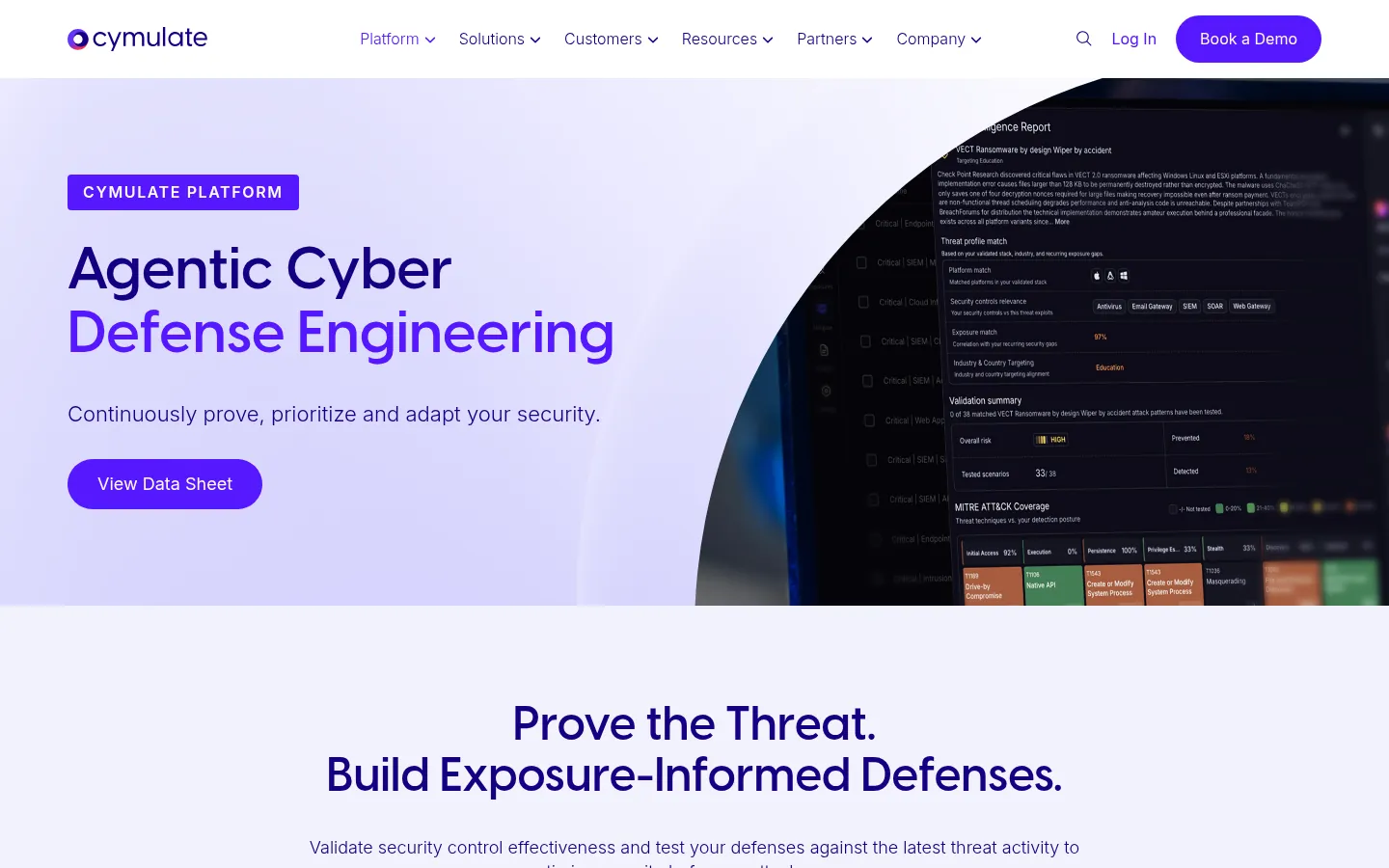
Cymulate, founded in 2016, tests whether security controls actually stop attacks. It simulates real attack techniques across endpoints, networks, email, web gateways and cloud to see whether controls prevent and detect them, without running real malicious payloads. Auto Mitigation pushes control updates through integrations, and detection rules it helps deploy are retested against the original attack scenario.
In June 2026 Cymulate relaunched its platform around what it calls agentic cyber defense engineering: prove, prioritise and adapt in a closed loop. At Black Hat USA in August it introduced Cymulate Cowork, a Claude plugin, and an MCP server, and announced a planned integration to feed Bitsight threat intelligence into exposure validation. Banco PAN, RBI, NTT, Telit and Euronext are named customers. As exposure programs move from lists to proof in 2027, validation tools that confirm a control works against a specific technique will sit closer to the center of the budget.
Ask in the demo: Cymulate says its simulations are production-safe and that Auto Mitigation pushes control updates through integrations: run one scenario against our EDR and SIEM, show which changes it would push without a person approving, and show the retest that proves the new rule works.
Read more: Cymulate on CISO Tribune, the spotlight, cymulate.com
Finite State
Founded 2017. Based Columbus, United States. Category Firmware and device supply chain security. Themes Application security; exposure management. Milestones on record 3.
Finite State, founded in 2017 in Columbus, serves the teams that build connected devices. It analyzes firmware, binaries and source code to build a software bill of materials for what actually ships, produces SBOMs, VEX statements and audit-ready evidence on demand, and cuts vulnerability noise using reachability and exploit context.
In February 2026 it recast its platform as an autonomous Product Security OS powered by AgentOS and launched an AI agent that rates how completely a firmware artifact was unpacked. Its researchers also found a 2026 consumer camera shipping with a web-server flaw first disclosed more than 20 years earlier. For CISOs at manufacturers, medical device makers and anyone buying connected equipment, the pressure in 2027 comes from both sides: regulators want evidence of what is inside a product, and procurement teams want proof that old flaws are not still shipping.
Ask in the demo: Finite State says it builds the SBOM from the firmware and binaries that actually ship and cuts noise with reachability: upload one of your own firmware images in the demo and show how much of it was unpacked, what the AI Unpacking Evaluation Agent scores it, and which findings reachability removes.
Read more: Finite State on CISO Tribune, absolute security vs finite state, finitestate.io
IONIX
Category External attack surface management. Themes Exposure management. Milestones on record 3.
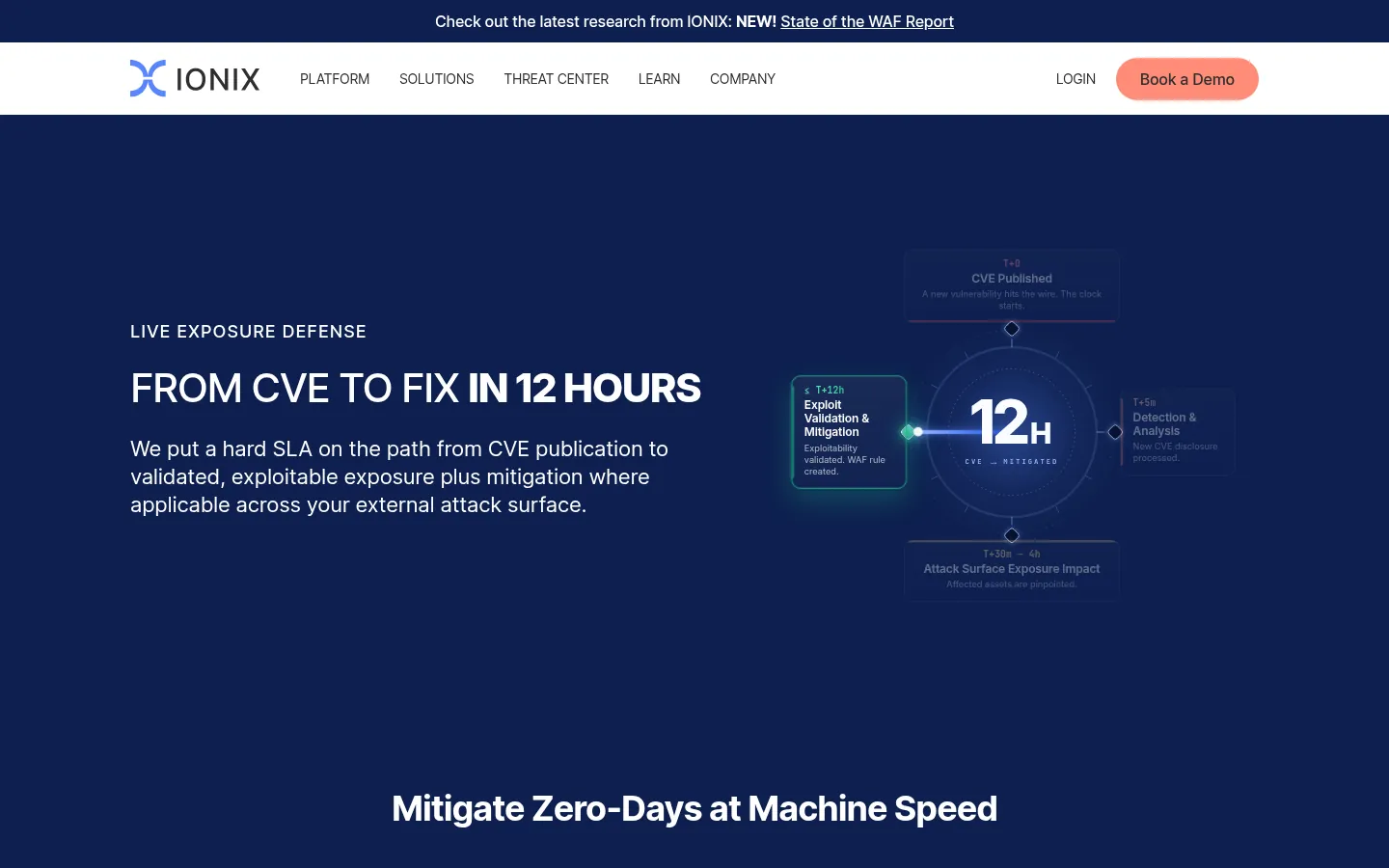
IONIX continuously finds and helps fix exposures on a company's internet-facing attack surface. It runs non-disruptive exploitability tests to confirm which exposures are real, and its Live Exposure Defense promises a 12-hour SLA from a CVE's publication to a confirmed exposure and mitigation guidance.
The company's 2026 record reads like a set of field tests of that promise. In October it published guidance on php2shell and mapped affected customer assets on the day of the PHP fix, and on 5 November it did the same for SSHhole. In July it joined Akamai's Technology Partner Program, linking exposure validation with Akamai runtime protection. E.ON and Grand Canyon Education are named customers. The window between disclosure and exploitation keeps shrinking, and boards now ask how fast a company knew it was exposed. A 12-hour commitment gives a CISO a number to report and to hold a vendor to.
Ask in the demo: IONIX puts a 12-hour SLA on going from CVE publication to a confirmed, exploitable exposure: for php2shell in October 2026, show the timestamps from disclosure to the first confirmed exposure in a customer tenant, and exactly what the non-disruptive test sent to our assets.
Read more: ionix.io
Keepit
Founded 2007. Based Copenhagen, Denmark. Category Backup and cyber recovery. Themes Readiness and response. Milestones on record 4.
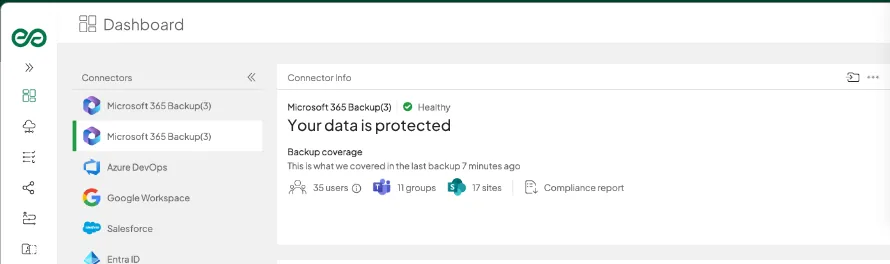
Keepit, founded in 2007 in Copenhagen, owns and runs its own vendor-independent cloud for SaaS data backup. It backs up Microsoft 365, Google Workspace and Salesforce data into an environment separate from the SaaS vendor's own, and says it uses no public cloud and no third-party subprocessors. Backups are immutable and the architecture is air-gapped, according to the company.
In July 2026 Keepit renewed and upsized its credit facilities to $90 million with EIFO and HSBC Innovation Banking, debt rather than equity. In August it announced AI Truth Cloud, the next version of its platform, which repositions the backup copy as a trusted data source for AI use. It also became available through the Pax8 marketplace. When identity or a SaaS tenant is compromised, the recovery copy is what remains, and European sovereignty rules are raising the bar for where that copy may live. Keepit's own cloud uses no public cloud provider and no third-party subprocessors.
Ask in the demo: Keepit says it runs its own cloud with no public cloud and no third-party subprocessors: show a full-tenant Microsoft 365 restore at your scale, and how long the 'multiple terabytes a day' restore rate holds for a tenant your size.
Read more: Keepit on CISO Tribune, acronis vs keepit, keepit.com
Legit Security
Based Boston, United States. Category Application security posture management. Themes Application security; ai agent and usage security. Milestones on record 5.
Legit Security's platform unifies vulnerability discovery, risk scoring and remediation from code to cloud. Its VibeGuard product secures AI coding agents on the developer's endpoint, and VibeGuard 2.0 followed in August. Gartner named VibeGuard a Sample Vendor in its report on mitigating the risks of agentic coding tools.
In June Legit launched autonomous remediation agents for SAST and SCA findings: they prioritise issues, write fixes, open pull requests and confirm the results. In May it partnered with Sweet Security to cover AI-driven software from code to cloud runtime. Google, NYSE, Kraft Heinz, Takeda Pharmaceuticals and ACV Auctions are named customers. Two things change for AppSec teams in 2027: more of the code is written by agents, and more of the fixes will be too. Legit is building for both at once, which makes its handling of review and merge permissions the detail to examine closely.
Ask in the demo: Legit's remediation agents open pull requests and confirm their own fixes: on one of our services, show an agent-written PR for a SAST finding, the test that 'confirms' it, and the setting that keeps any of those PRs from merging without a named developer approving it.
Read more: Legit Security on CISO Tribune, the spotlight, legitsecurity.com
Lookout
Based Boston, United States. Category Mobile security. Themes Exposure management; readiness and response. Milestones on record 4.
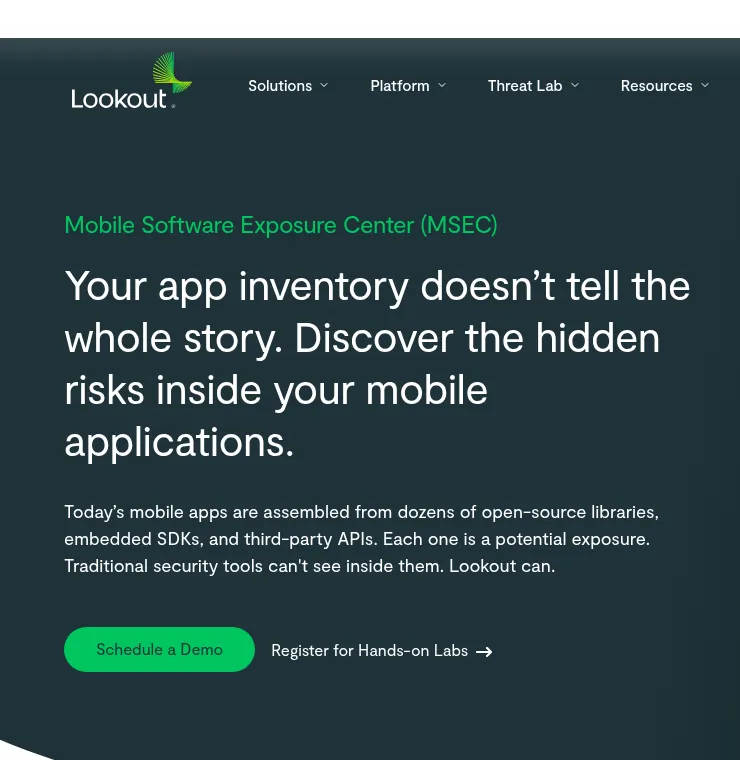
Lookout, based in Boston, covers apps, devices, operating systems, networks and content on phones without VPN backhaul. AI Visibility & Governance shows and controls which AI apps staff use on mobile.
In July 2026 it launched the Mobile Software Exposure Center, which finds and prioritizes vulnerable code inside mobile apps. The launch cited DarkSword, an iOS exploitation framework its researchers discovered. In September it integrated Android Enterprise's Device Trust APIs and launched Social Engineering Protection, which checks texts and calls for scams. Phones carry the same identities, approvals and AI assistants as laptops, and attackers increasingly start there with a text or a call. In 2027 mobile risk joins the exposure program instead of sitting beside it.
Ask in the demo: Lookout's MSEC launch release argues today's CTEM platforms miss vulnerable components inside trusted mobile apps: which of your current exposure tools would ingest MSEC findings, and in what format?
Read more: Lookout on CISO Tribune, lookout.com
Mars Security
Based New York, United States. Category Security data lakes and pipelines. Themes Readiness and response. Milestones on record 2.
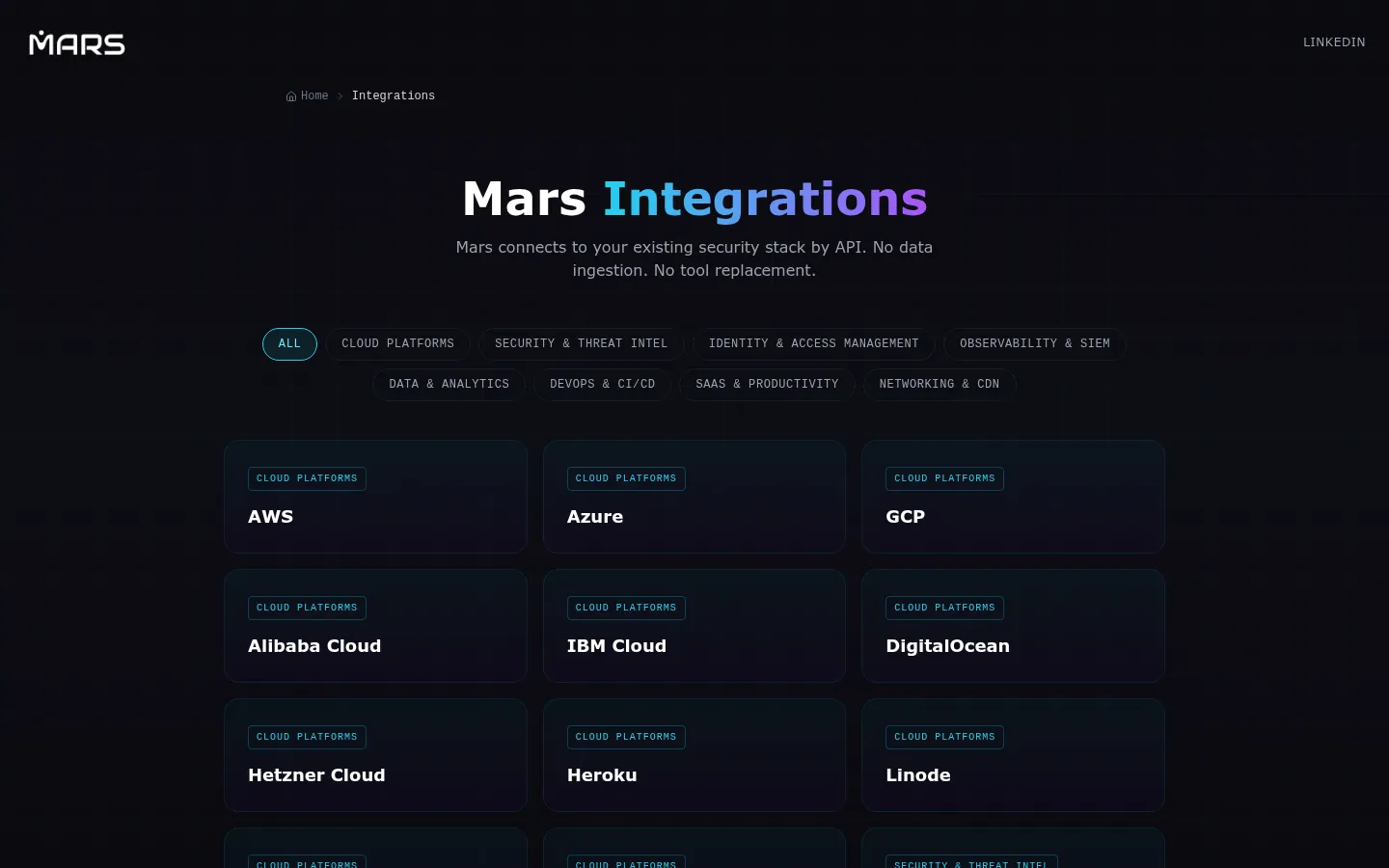
Mars Security, based in New York, hunts across log sources, cloud and endpoints without copying the data into its own store. It connects to an existing security stack by API, with no ingestion and no tool replacement, and turns new threat intelligence into MITRE ATT&CK-mapped detections written in each tool's own query language.
In September 2026 it launched Real-Time Intel-Based Detection, which turns newly published intelligence into tested detection rules within minutes. In October it introduced Mars Prevention, after finding, by its own count, that customers' EDRs did not recognise 40% of the malware files its intelligence pipeline identified. Mars Prevention checks each indicator against the customer's own environment before it suggests a block. Detection engineering is one of the slowest jobs in a SOC, and writing and testing rules without moving the data cuts both that delay and the cost of storing everything twice.
Ask in the demo: Mars says nothing ships untested and that it will manage block lists end to end inside our EDR: take one rule it wrote from a recent advisory, show the test run against our own data, and show who approves a block before Mars pushes it into the EDR.
Read more: Mars Security on CISO Tribune, the spotlight, marssec.ai
Mate Security
Founded 2025. Based Tel Aviv, Israel. Category AI SOC analysts. Themes Readiness and response; ai agent and usage security. Milestones on record 5.
Mate Security, founded in 2025 in Tel Aviv, builds AI SOC agents. It models the customer's organisation and turns that model into vetted knowledge for its agents. Gamebooks set how an investigation runs, the evidence required, the actions permitted and the approval boundaries, and deployments start in shadow mode on real alerts.
Mate came out of stealth in November 2025 with a $15.5 million seed from Team8 and Insight Partners, joined the 2026 CrowdStrike, AWS and NVIDIA startup accelerator, and raised a $35 million Series A led by Canaan Partners in July. It launched Gamebooks in August. Bridgewater Associates, Lead Bank, Merlin Entertainments, OCBC, AlphaSense and Applied Systems are named customers. In 2027 SOC teams will judge AI analysts less on speed than on governance: what the agent may do on its own and how that is proven to an auditor.
Ask in the demo: Mate starts in shadow mode and lets Gamebooks set what its agents may do: translate one of our SOAR playbooks into a Gamebook, show its permitted actions and approval boundaries, and tell us which actions the agent took without a human in your largest customer's first 90 days.
Read more: Mate Security on CISO Tribune, the spotlight, 7ai vs mate security, mate.security
NewCore
Based Tel Aviv, Israel. Category Non-human identity security. Themes Identity and non-human identity; ai agent and usage security. Milestones on record 2.
NewCore, based in Tel Aviv, treats people and AI agents as one identity problem. Discover maps both in a single identity graph across the identity vendors a company already runs. Secure gives agents short-lived, task-scoped access bounded by the permissions of the person they act for, with no standing credentials. Govern checks each agent action against one policy engine and ties every decision to an owner.
The company came out of stealth in June 2026 with $66 million from Cyberstarts, Index Ventures and Evolution Equity Partners. Its Identity Foundation splits the token-signing key between NewCore's cloud and the customer's environment, and an Agentic Skill package lets coding agents such as Claude Code, Codex and Cursor authenticate inside the enterprise trust map. Most identity programs were built for people with jobs and managers. Agents have neither, and in 2027 the auditor's question of who approved an agent's access will need an answer. NewCore is designed around giving one.
Ask in the demo: Secure Split Key needs both shares to sign a token: what happens to sign-in and to agent access if NewCore's cloud share is unreachable, and how long did a live coexistence cutover from an existing IdP actually take?
Read more: NewCore on CISO Tribune, the spotlight, newcore.com
Nucleus Security
Based Sarasota, Florida, United States. Category Exposure prioritisation and CTEM. Themes Exposure management. Milestones on record 3.
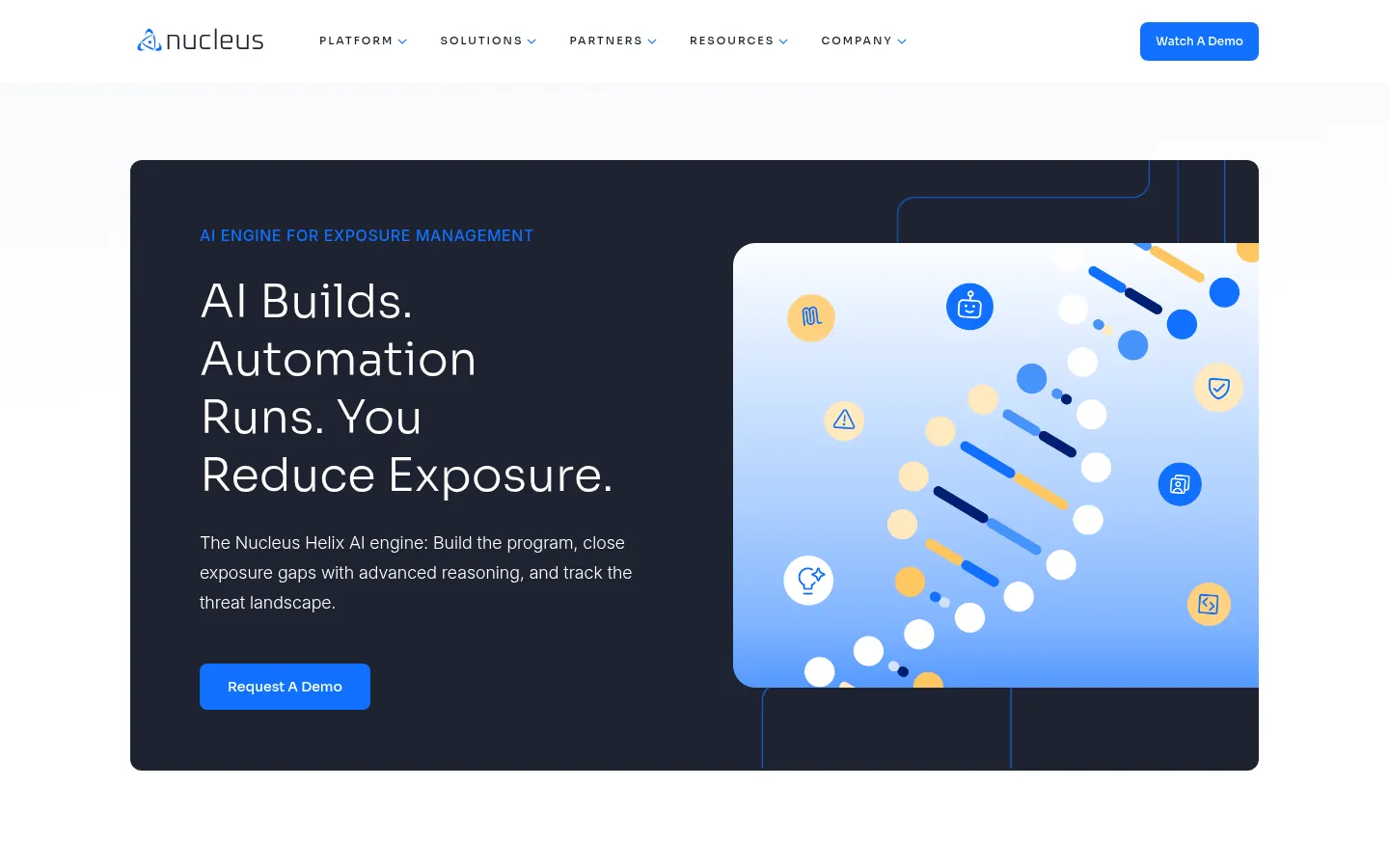
Nucleus Security, based in Sarasota, Florida, pulls findings from a company's security and business tools into one view and enriches each vulnerability with threat intelligence, risk ratings and exploit flags. It is FedRAMP Moderate authorized and sells to US federal, defence and state and local government.
In February 2026 Nucleus raised a $20 million Series C led by Delta-v Capital. In August it launched Nucleus Helix, an AI engine for exposure management, with Nucleus Discover and expanded Nucleus Insights. Helix adds an AI agent for querying exposure data and building programs in plain language, and the company says Discover can flag likely exposure to a new flaw before scanner signatures exist. IDC listed it as a Major Player in its 2025 worldwide exposure management assessment. The National Rural Electric Cooperative Association is a named customer. In 2027 the gap between disclosure and scanner coverage is where exposure teams lose time; a tool that works in that gap is worth testing.
Ask in the demo: Nucleus Discover says it can flag exposure to a newly disclosed flaw before scanner signatures exist: for a recently disclosed flaw, show what Discover flagged before our scanners did, and how a Helix-built workflow then routed the fix to an owner.
Read more: nucleussec.com
Orca Security
Founded 2019. Based Israel. Category Cloud-native application protection (CNAPP). Themes Cloud and network; ai agent and usage security. Milestones on record 5.
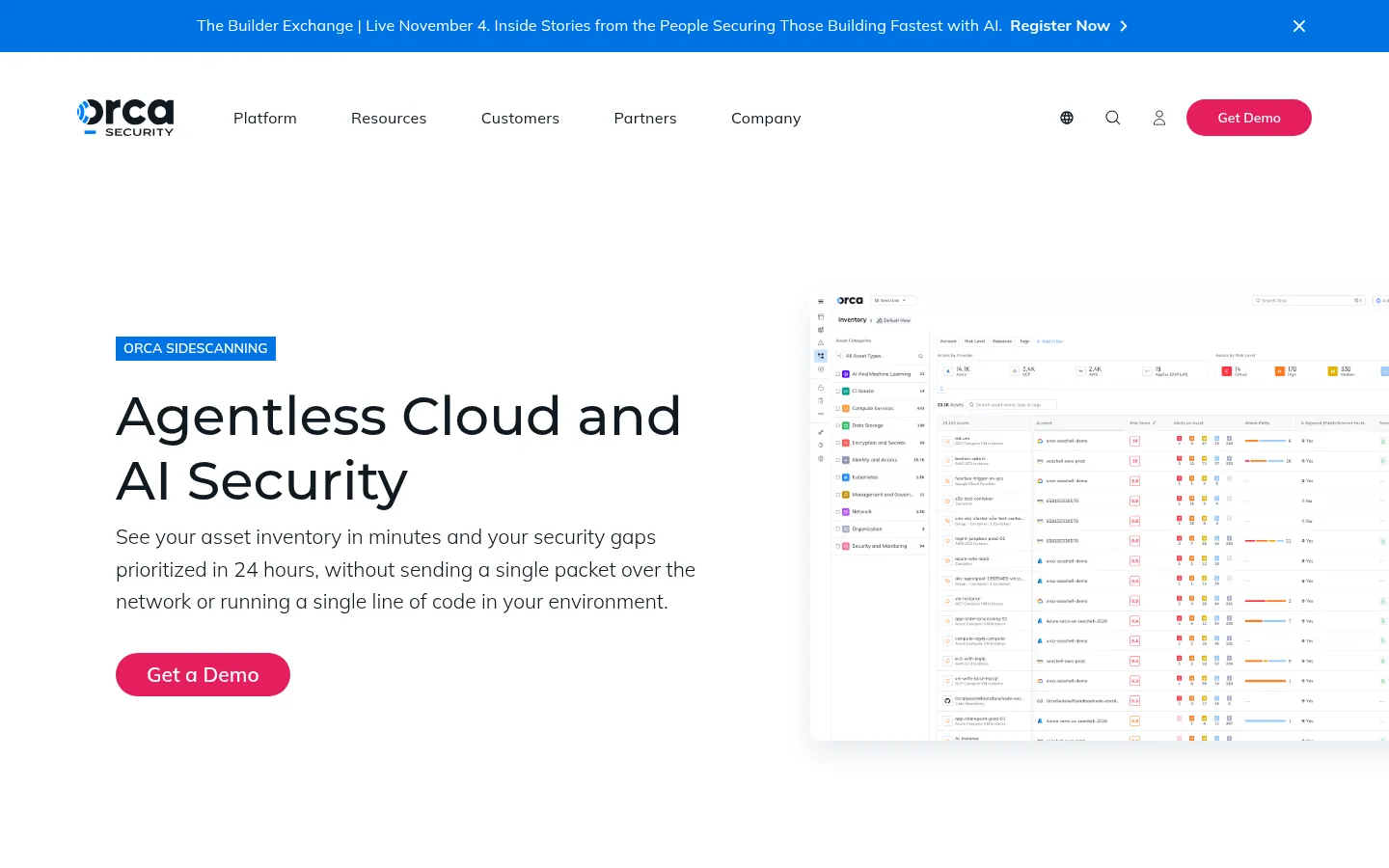
Orca Security, founded in 2019, sells one platform that covers code, cloud and AI environments. Its SideScanning technology scans every cloud workload without installing agents, Orca Sensor adds runtime protection where an agent is wanted, and a Threat Investigation Agent reconstructs the events behind a detection and proposes a likely root cause.
In July 2026 Orca published its 2026 State of AI Security Report, drawn from telemetry on more than 1,200 production organizations. Weeks later it announced Orca AI AppGen Security and an AI Code Security Auditor ahead of Black Hat USA, with general availability later in 2026. It moved its North American reseller business to distribution through TD SYNNEX and localized its platform in Japanese. Blue Yonder, Autodesk, SAP and Lemonade are among its named customers. Cloud security in 2027 has to cover applications that AI tools generated and deployed, often without a security review. Orca's AppGen product is aimed squarely at that gap.
Ask in the demo: Take one detection from last month: which events did the Threat Investigation Agent reconstruct from agentless SideScanning snapshots and which needed the Orca Sensor, and how often have your analysts overturned the root cause it proposed?
Read more: Orca Security on CISO Tribune, the spotlight, orca.security
Orchid Security
Based New York, United States. Category Identity governance and administration. Themes Identity and non-human identity; ai agent and usage security. Milestones on record 6.
Orchid Security finds the applications that identity tools do not manage, maps how identity works inside each one, and brings them under IAM, IGA, PAM and audit control without rewriting them. Its AI reads the authentication and authorization logic in each app to flag weak encryption, hardcoded credentials and missing controls.
Orchid's Identity Gap: 2026 Snapshot reported that identity outside IAM's view now outweighs visible identity, 57% to 43%. It launched Identity Audit in February, announced in March that Gartner had listed it as a Representative Vendor in its Market Guide for Guardian Agents, and in September added identity drift detection and application-level kill switches for AI agents. It joined the SailPoint Technology Alliance Partner ecosystem in August. HUB International and Costco are named customers. If most identity sits where IAM cannot see it, every agent program built on IAM inherits that blind spot in 2027.
Ask in the demo: Orchid says its analysis of authentication logic inside each app is fully autonomous: on one of our home-grown apps, show the identity graph it builds, and then trigger an application-level kill switch for an AI agent and show what the app's owner sees.
Read more: Orchid Security on CISO Tribune, the spotlight, orchid.security
Reflex Security
Founded 2025. Category Breach simulation and automated pen-testing. Themes Readiness and response. Milestones on record 1.
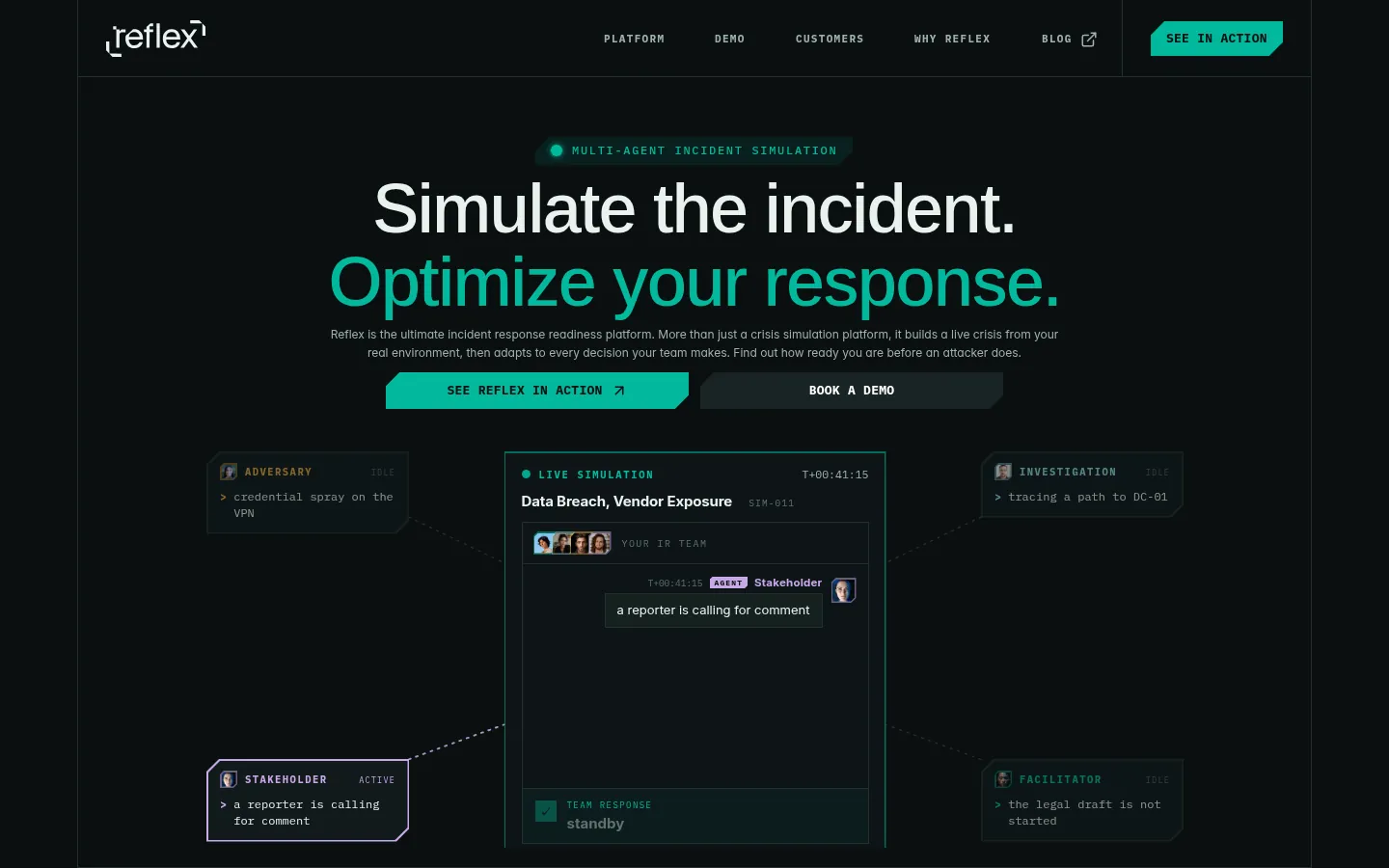
Reflex Security, founded in 2025, sells an AI-powered incident response simulation platform. Each simulation is built from the customer's real environment and adapts to the team's decisions as it runs. Scenarios are assembled automatically from open-source intelligence about the organisation, an AI facilitator called Victoria runs the exercise, and each one ends with an after-action report generated in one click.
Reflex is the youngest company on this list and its public record is short. In October 2026 its blog reported that the simulation records of two teams facing the same business email compromise were presented at the Global CISO Forum during Hacker Halted 2026. That comparison is the point of the product: two teams, one incident, different decisions, all of it recorded. Tabletop exercises have long been a once-a-year ritual with a slide deck. Regulators and boards now ask for evidence that a company has practiced its response, and in 2027 a simulation that adapts to the team's choices and produces a record will be easier to defend than a meeting summary.
Ask in the demo: Scenarios are built from OSINT about us and run by the AI facilitator Victoria: what exactly does Reflex collect to build our scenario, and how does each after-action finding trace back to the moment in the simulation that produced it?
Read more: Reflex Security on CISO Tribune, reflexsecurity.io
Rival Security
Category Exposure prioritisation and CTEM. Themes Exposure management; ai agent and usage security. Milestones on record 4.
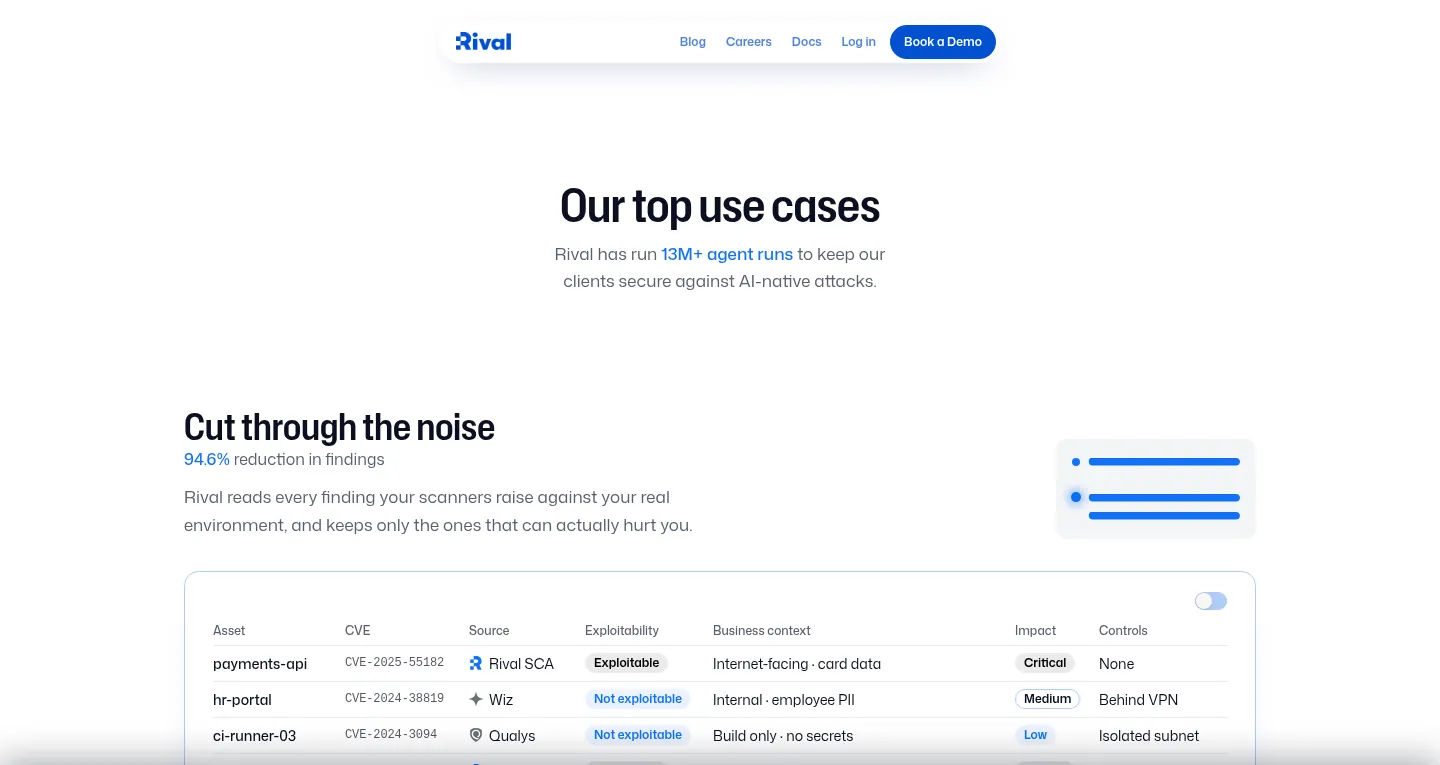
Rival Security sells what it calls an agent harness, which gives security agents the capabilities and context to run across a company's cloud, code and infrastructure. Its agents re-check every scanner finding against the real environment and keep only the exploitable ones. Ownership Resolution routes each finding to the team that can fix it, and Autonomous Remediation generates and ships tested fixes.
Rival's record is research-heavy. In February 2026 it released SASTBench, a benchmark for AI agents that triage SAST findings. In May it argued that a kernel bug credited to an AI model's discovery was a 20-year-old flaw likely present in its training data, and in November it published a case study on how its agents found and mitigated customer exposure to PHP2Shell before patches were complete. Vulnerability backlogs grow faster than teams can triage them, and most findings are not exploitable where they sit. The vendors that can prove which ones are, and route them to an owner, change the economics of an exposure program in 2027.
Ask in the demo: Rival says it keeps only the findings that can actually hurt us: on our own scanner output, show three findings it dropped as not exploitable and the evidence its agents gathered for each, and what an Autonomous Remediation fix looks like before it ships.
Read more: Rival Security on CISO Tribune, rival.security
Scytale
Founded 2021. Based New York, United States. Category Compliance automation. Themes Readiness and response; ai agent and usage security. Milestones on record 3.
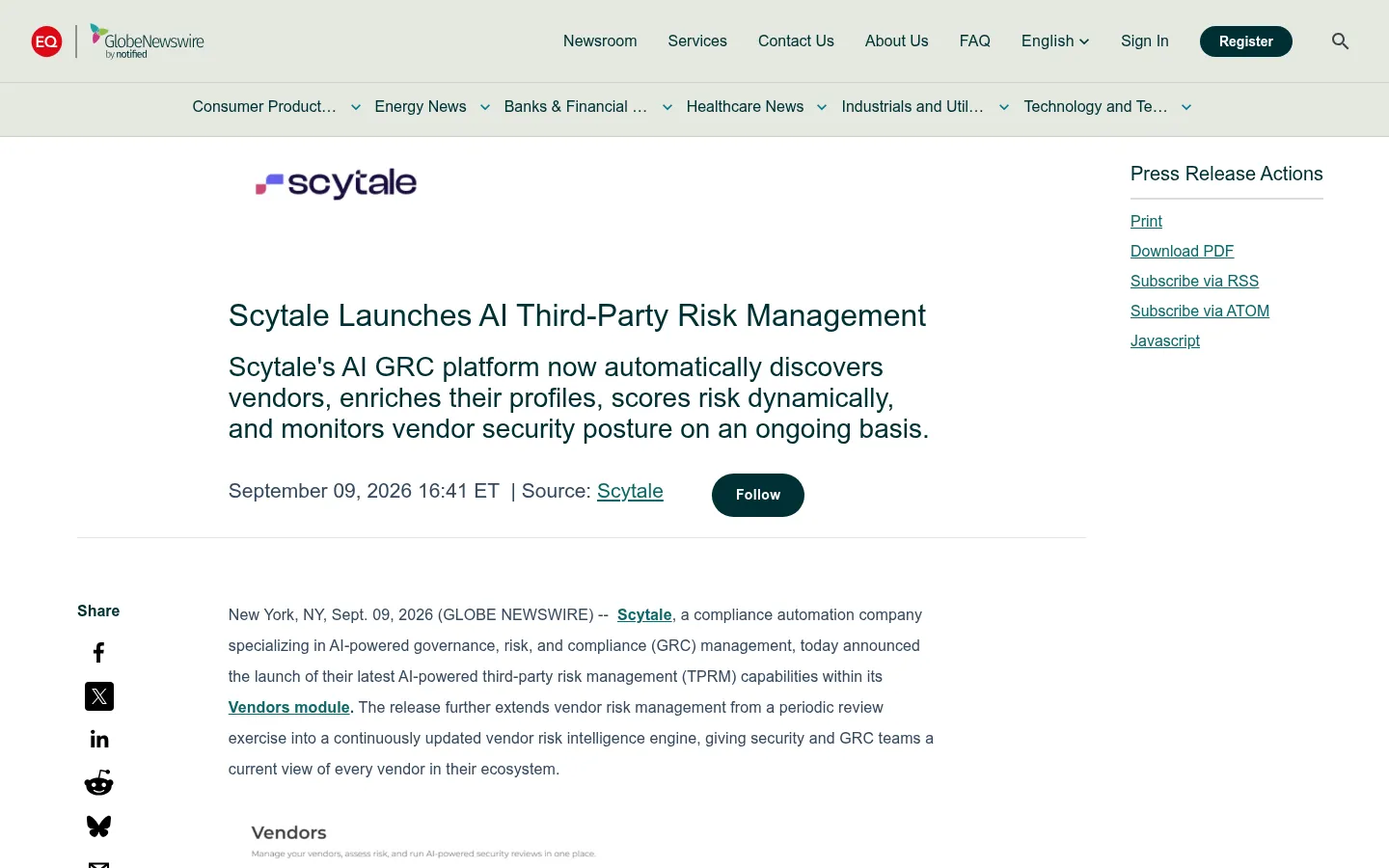
Scytale, founded in 2021, automates compliance across more than 60 frameworks, including SOC 2, ISO 27001, PCI DSS, GDPR and HIPAA, through more than 150 integrations. AI compliance agents handle gap detection, evidence validation, policy analysis and third-party risk work.
In March 2026 it expanded its SOX IT general controls offering, building on its 2025 acquisition of AudITech. In September it launched AI third-party risk management in its Vendors module, with discovery, enrichment, dynamic risk scoring and continuous monitoring; the module discovers third parties from the SSO provider and integrations. In October it launched Scytale MCP, which connects customers' AI tools to their compliance data, read-only in its first phase. ICL Group, PwC, Deel and Guesty are named customers. Third-party risk is where many breaches start, and most programs still run it on questionnaires. Discovery from the SSO log gives a 2027 vendor review a list built from actual use.
Ask in the demo: Scytale MCP is read-only today and the next phase adds a write capability for evidence uploads: when an AI tool attaches evidence to a control, who approves it, how is that logged for the auditor, and which of the 60-plus frameworks will accept AI-attached evidence?
Read more: Scytale on CISO Tribune, scytale.ai
Sentra
Founded 2021. Based New York, United States. Category Data security posture management. Themes Cloud and network; ai agent and usage security. Milestones on record 4.
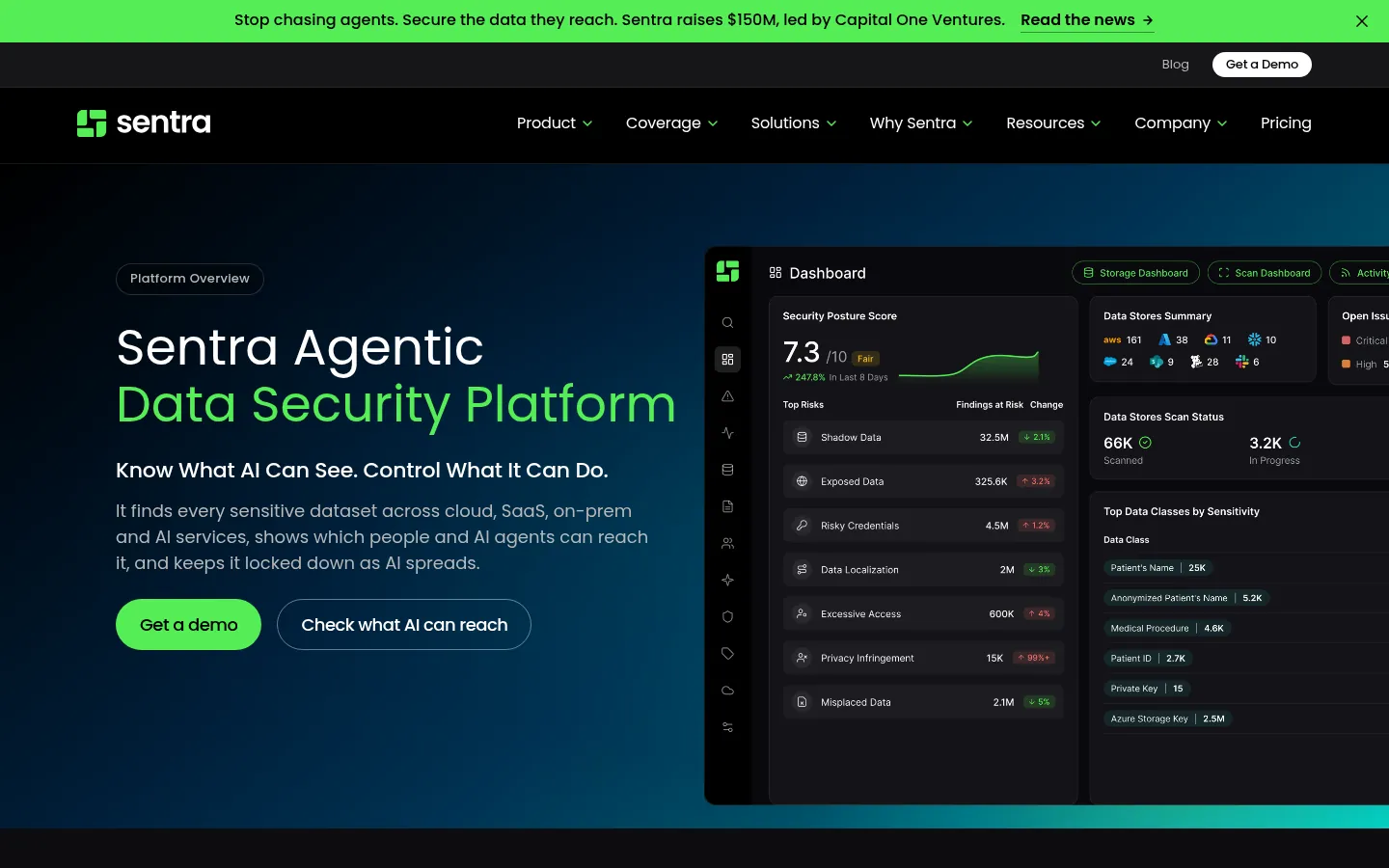
Sentra, founded in 2021, finds sensitive data, maps which people and AI agents can reach it, and removes access that should not be there, working inside the customer's environment. Shadow AI DLP discovers which AI tools staff use and blocks sensitive data from being shared with them, and its scanners are typically deployed inside the customer's cloud with read-only permissions.
On 4 November 2026 Sentra raised a $150 million strategic investment led by Capital One Ventures, and the announcement named Lyft's CISO as a customer. Earlier in the year it launched data security for Google Workspace with Gemini and a platform for continuous AI data readiness and governance. The company says the new money goes to protecting data at rest and controlling what AI agents can reach. In 2027 data security teams will be asked to show, per agent, what it can read, which is the map Sentra draws.
Ask in the demo: Sentra says its scanners run inside your cloud with read-only permissions and that it maps which AI agents can reach sensitive data: show the exact permissions the scanner role holds, and what metadata, if any, leaves the account.
Read more: Sentra on CISO Tribune, sentra.io
Sygnia
Founded 2015. Based Tel Aviv, Israel. Category Incident response and forensics. Themes Readiness and response. Milestones on record 7.
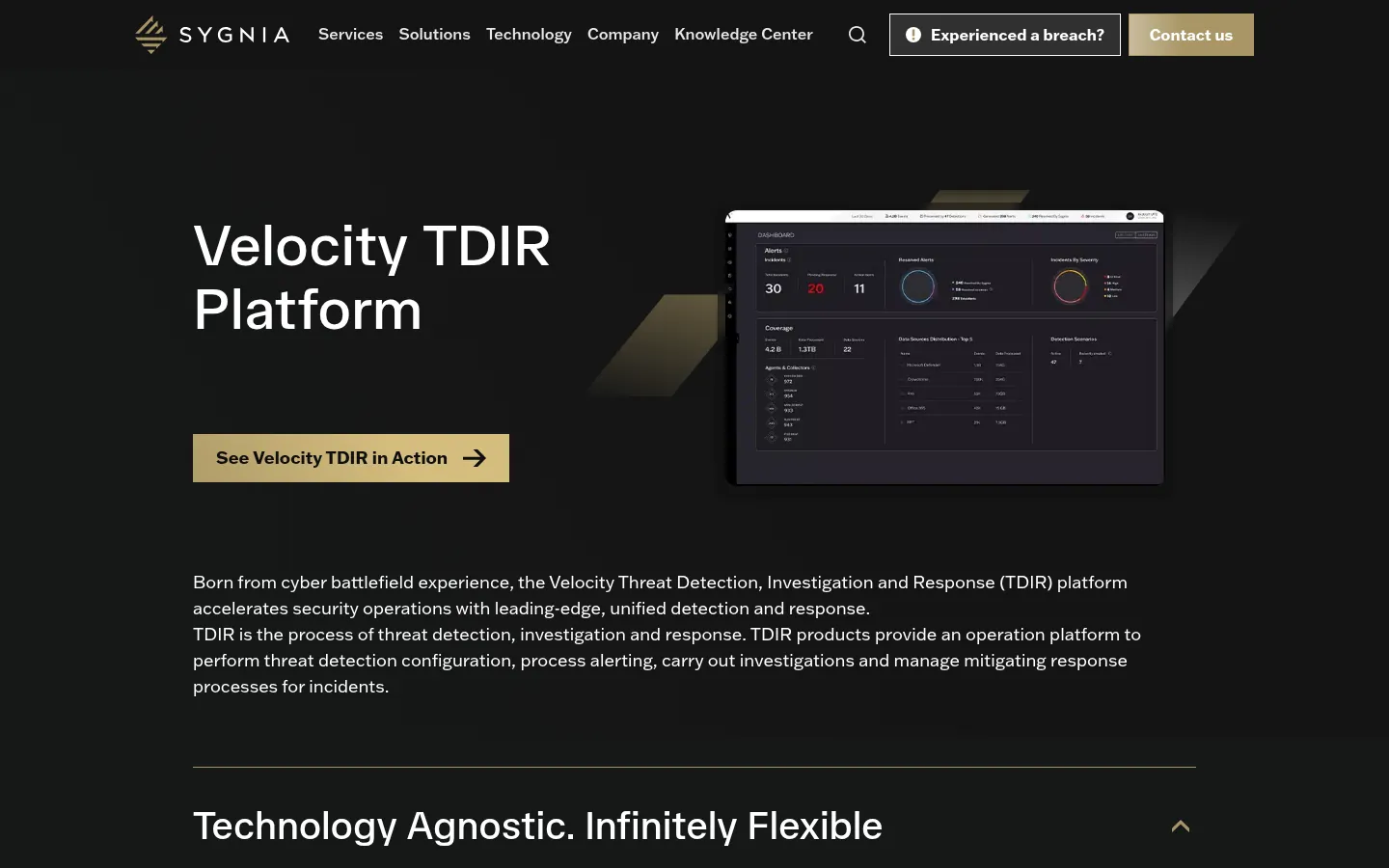
Sygnia, founded in 2015, sells incident response, managed detection and response, and proactive resilience work. Its MDR runs on Velocity, its own detection and response platform built by incident responders, and because MDR and incident response share the same technology, a customer can switch from monitoring to a full investigation.
In 2026 it released a 2026 CISO survey on incident response readiness, based on 600 senior security decision makers, and was named a Representative Vendor in Gartner's 2026 Market Guide for incident response retainer services. Its responders published findings on a lone attacker who used AI to extort a global enterprise and on the China-nexus actor Fire Ant. In October it opened new MDR SOC hubs in Austin and Singapore, citing a roughly 40% rise in incident response projects from the first half of 2025 to the first half of 2026. Oregon Lottery, Repsol and Bybit are named customers. If AI makes small attackers more capable, the number of incidents that need experienced responders goes up, not down. Sygnia's own numbers point that way.
Ask in the demo: Your MDR runs on the same Velocity platform as your incident response team: when you flip a customer from MDR to a full IR engagement, what changes in the first hour, and what did the new Austin and Singapore SOC hubs change for response times in our region?
Read more: Sygnia on CISO Tribune, the spotlight, sygnia.co
Token
Founded 2014. Based Rochester, New York, United States. Category Passwordless authentication and authenticators. Themes Identity and non-human identity; ai agent and usage security. Milestones on record 3.
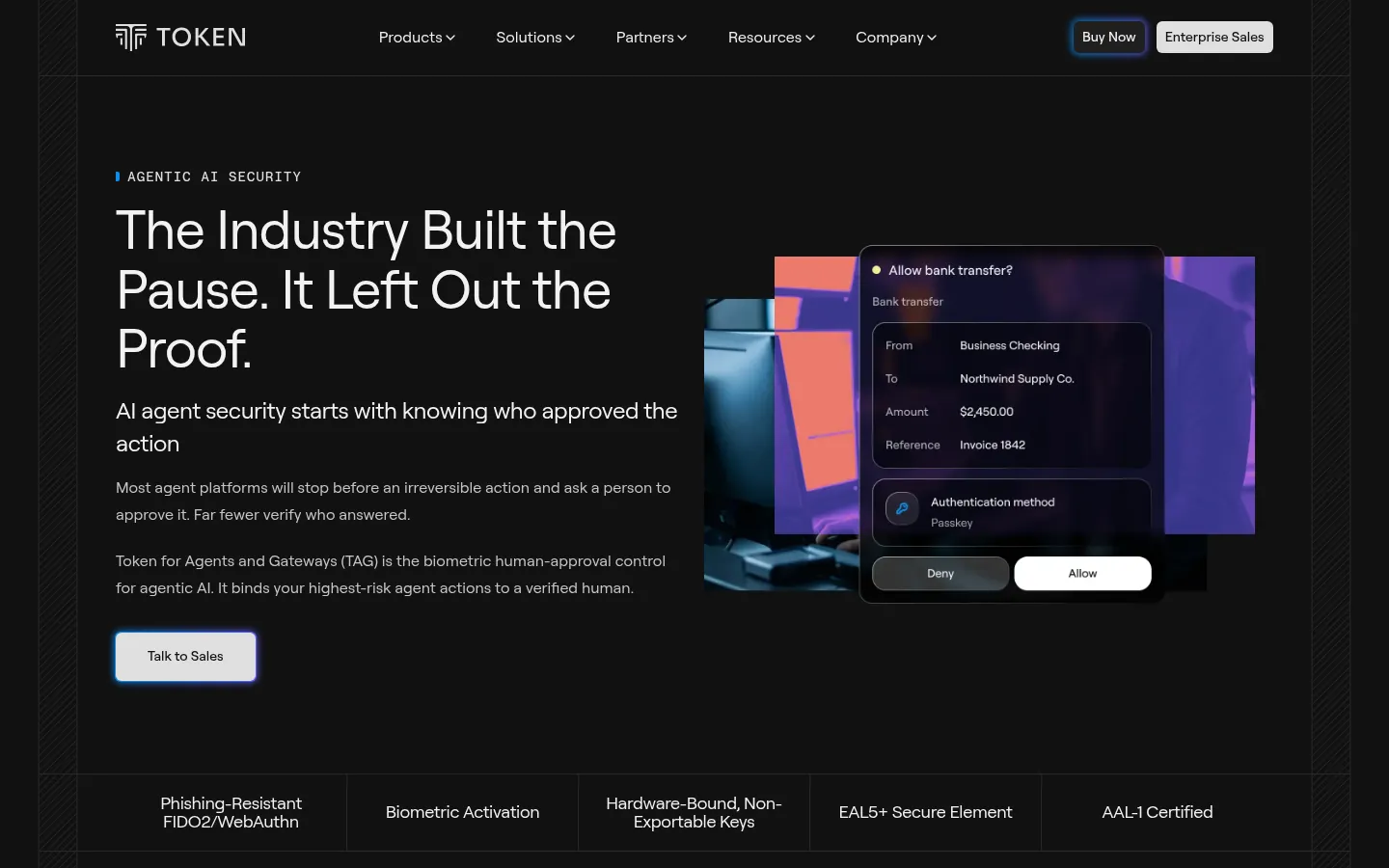
Token, founded in 2014 in Rochester, New York, sells biometric authentication devices and human-bound passkeys for enterprises. Its products pair fingerprint verification and secure hardware with FIDO2 sign-in.
In June 2026 Token extended its biometric identity architecture to AI agents, with biometric hard gates on high-consequence actions. Token for Agents and Gateways puts a person's biometric approval in front of agent actions such as moving money or changing access rights. In October it unveiled TokenCore Card, a fingerprint-sensing metal keycard, at Authenticate 2026, and positioned its wearable and portable keys for Salesforce's phishing-resistant access requirements. Phishing-resistant sign-in is becoming a contract requirement, and agentic workflows add a new kind of approval: a person confirming that an agent may take an irreversible action. In 2027 that confirmation needs to be bound to a real human, and Token makes the hardware for it.
Ask in the demo: Token for Agents and Gateways stops an agent at a biometric hard gate before actions like moving money or changing access rights: which agent gateways does it plug into today, and what happens to the workflow when the approver's TokenCore device is lost or offline?
Read more: Token on CISO Tribune, tokencore.com
TXOne Networks
Based Taipei, Taiwan. Category OT and ICS security. Themes Cloud and network; exposure management. Milestones on record 3.
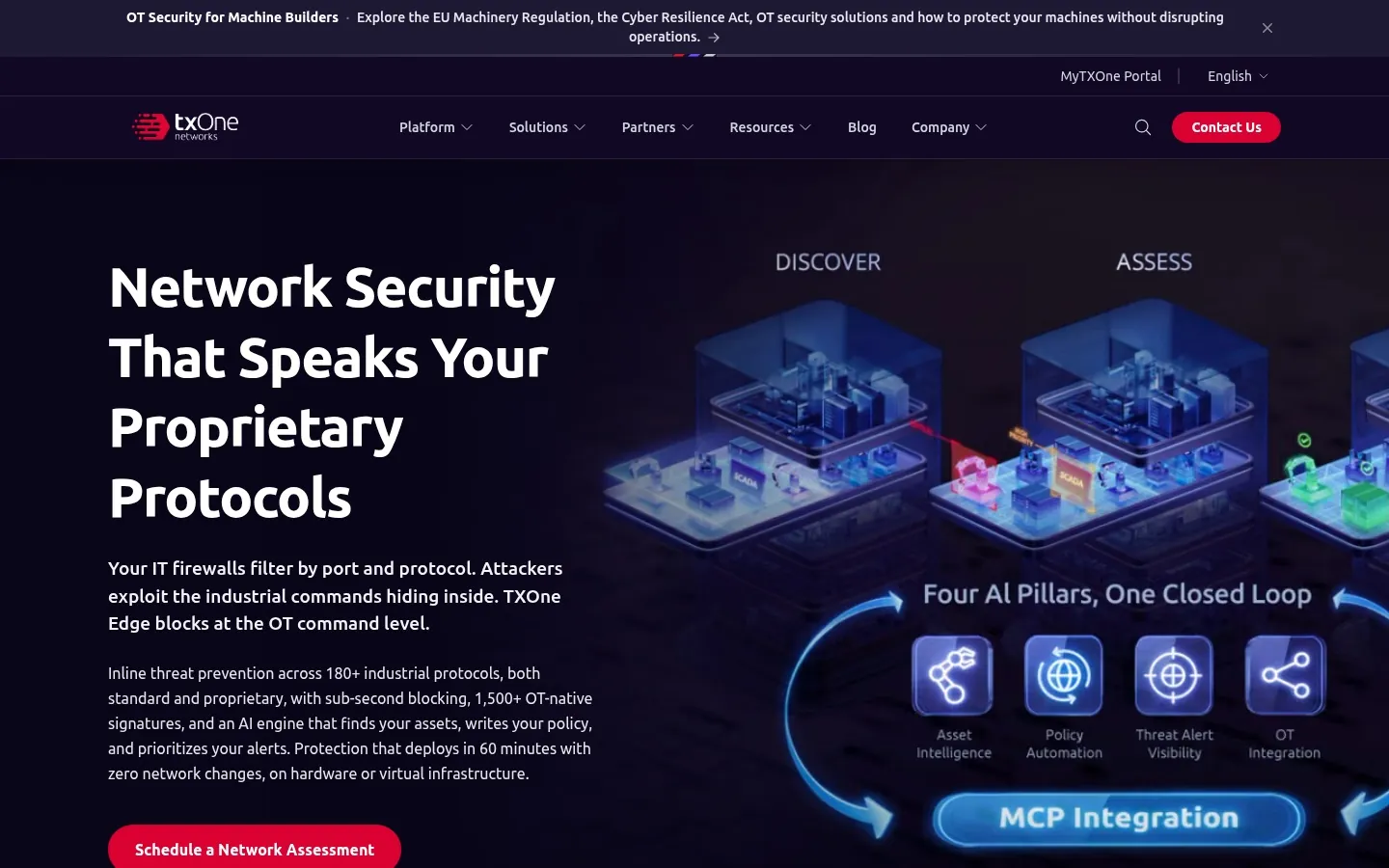
TXOne Networks, based in Taipei, sells network-based and endpoint-based products that protect operational technology networks and mission-critical industrial devices. The company says its products run at Purdue model Levels 0 to 3, where IT security tools do not work well, and that its Edge network protection deploys in 60 minutes with no network changes. It cites more than 3,600 deployments.
In March 2026 Siemens again certified TXOne Stellar as one of four supported antivirus products for SIMATIC WinCC OA. In April it previewed Stellar Discover, a lightweight sensor for OT asset visibility and vulnerability assessment, and in June it announced Virtual Portable Inspector, software-based inspection for sites where physical inspection is hard to scale. Carlsberg Group and Ansaldo are named customers. Industrial sites are adding connected equipment faster than they can patch it, and OT incidents now reach the board directly. Security that installs without changing the network is often the only kind a plant manager will accept.
Ask in the demo: TXOne says Edge deploys in 60 minutes with zero network changes and that its products run at Purdue Levels 0-3: what happens to production traffic if an inline Edge appliance fails, and how is that tested?
Read more: TXOne Networks on CISO Tribune, txone.com
Veriff
Founded 2015. Based Tallinn, Estonia. Category Identity verification. Themes Identity and non-human identity. Milestones on record 4.
Veriff, founded in 2015 in Tallinn, sells one platform for identity, biometric and business verification, automating KYC, KYB and AML checks for regulated onboarding. It says more than 3,000 businesses use it, and its menu now lists a Know Your Employee use case alongside customer onboarding.
In January 2026 Veriff reported a 100% detection rate on synthetic fraudulent documents in its own benchmark against the IDNet dataset; that is the company's own test. In February it acquired Vespia, an Estonian business verification provider, partnered with Data Zoo to add authoritative data checks, and upgraded its trust and safety suite for marketplaces. Hiring fraud using deepfakes and stolen identities is now a security problem as well as an HR one. Verifying that a new employee or contractor is who they claim to be is moving onto the CISO's list of controls for 2027.
Ask in the demo: Veriff's 100% synthetic-document detection figure comes from its own benchmark on the IDNet dataset: what are its false-reject rates on genuine documents in that same test, and how does the Know Your Employee flow hold up against a deepfaked video interview?
Read more: Veriff on CISO Tribune, veriff.com
Six themes that will shape 2027 budgets
Counting each company's 2026 milestones under its main theme shows where the year's work went. Cloud and network and exposure management carry the most, and the agent thread runs through all six.
Source: CISO Tribune research: company pages, releases and trade press read 6 Nov 2026
| Label | milestones |
|---|---|
| AI agents and AI use | 2 |
| Identity and NHI | 15 |
| Exposure management | 28 |
| Cloud and network | 31 |
| Application security | 15 |
| Readiness and response | 22 |
AI agent and usage security
The question in 2026 shifted from which models employees use to what agents are allowed to do. The answers on this list sit at the point of action. Bay judges each agent action on the endpoint against session context and returns Allow, Ask or Deny before it runs. NewCore gives agents short-lived, task-scoped access bounded by the person they act for. Orchid added application-level kill switches for agents, and Token puts a biometric approval in front of high-consequence agent actions. Expect 2027 requests for proposals to ask who approves an agent's action, where that approval is logged, and what happens when the approver is not there.
Source: CISO Tribune research: company pages, releases and trade press read 6 Nov 2026
| Label | launches |
|---|---|
| 2025 Q4 | 0 |
| 2026 Q1 | 4 |
| 2026 Q2 | 10 |
| 2026 Q3 | 13 |
| 2026 Q4 | 4 |
Identity and non-human identity
Identity is where the agent question becomes concrete, because every agent needs credentials. Orchid's finding that most identity sits outside IAM's view sets the scale of the problem. NewCore splits the token-signing key between its cloud and the customer's environment, Act Security removes excess cloud access after testing each change against a digital twin, and Veriff extends verification to employees as deepfakes improve. The 2027 test for an identity vendor is whether it can show, for any agent, who owns it and what it can reach.
Exposure management
Exposure programs are moving from long lists to proof. IONIX puts a 12-hour SLA on going from a published CVE to a confirmed exposure, Rival Security's agents keep only findings they can show are exploitable, Nucleus Security says Discover can flag exposure to a new flaw before scanner signatures exist, and Cymulate retests detection rules against the attack they were written for. Lookout and Finite State carry the same idea into mobile apps and firmware. The budget line to watch is validation: tools that show which finding matters, with evidence.
Cloud and network security
Cloud and network vendors are rebuilding inspection for AI traffic. Cato put GPUs across its backbone for real-time AI inspection and extended controls to local agents on laptops. Orca added security for AI-generated applications and code. Corelight turns network traffic into evidence for AI-driven detection, and TXOne protects industrial devices at the levels where IT tools do not work well. In 2027 the network is again a place to enforce policy on machines that act for people.
Application security
When AI writes much of the code, application security has to work inside the coding loop. Checkmarx's Developer Assist fixes risky code as assistants generate it, Legit Security's remediation agents write fixes and open pull requests, and Orca announced an AI code security auditor. Finite State builds the software bill of materials from the firmware that actually ships. The 2027 question for every AppSec tool is the same one CISOs ask of people: who reviews the agent's change before it merges.
Readiness and response
Response work is growing, and the tools around it are changing shape. Sygnia ties a roughly 40% rise in incident response projects to new SOC hubs in Austin and Singapore. Mate Security's Gamebooks set what its AI SOC agents may do and where a human must approve. Mars Security turns new threat intelligence into tested detections, Reflex Security runs incident simulations built from a company's own environment, Keepit keeps SaaS backups in its own cloud, separate from the SaaS vendor, and Scytale's agents prepare compliance evidence. Readiness is becoming something a team practices against its own data, not a document it files.
Questions to put to every company on this list
A list like this is a starting point for conversations, so it ends with four questions that work for any of the 26.
What does the agent do without a person? Almost every company here now ships an agent or an agent-facing feature. Ask for the exact list of actions it takes alone, the actions that need approval, and where both are logged.
What leaves our environment? Several products run inside the customer's cloud or connect without copying data. Ask for the permissions the product holds and the data, including metadata, that reaches the vendor.
Show us on our data. Many of the claims above are the companies' own figures. A short proof on your own environment, with your own alerts, code or assets, is worth more than any benchmark.
What changed in the last six months? Every company here shipped something in 2026. Ask what customers asked for that drove it, and what the vendor decided not to build.
Frequently asked questions
- How were the companies in this feature chosen?
- Every company here has at least one dated milestone between November 2025 and November 2026 that can be read on a primary page, sells a product or service a CISO buys, runs or answers for, and works on at least one of six problems that will shape 2027 security programs: AI agent and usage security, identity and non-human identity, exposure management, cloud and network security, application security, and readiness and response.
- Why are the companies listed alphabetically?
- The feature describes what each company sells and what it did in 2026. Alphabetical order keeps the list easy to scan and makes no comparison between companies that sell different things.
- How were the facts checked?
- Every fact in the feature carries the passage it rests on, taken from the company's own pages, its press releases or established trade and business press, and every passage was read again on its live page on 6 November 2026. Figures such as revenue, growth or detection rates are the companies' own claims and are marked as such.
- Where can I read more about each company?
- Each section links to the company's page on CISO Tribune, which carries its full record and sources, and, where one exists, a longer spotlight and comparisons with neighbouring vendors.
Companies in this feature
- Act Security · act.security
- Axonius · axonius.com
- Bay · bay.io
- Cato Networks · catonetworks.com
- Checkmarx · checkmarx.com
- Corelight · corelight.com
- Cymulate · cymulate.com
- Finite State · finitestate.io
- IONIX · ionix.io
- Keepit · keepit.com
- Legit Security · legitsecurity.com
- Lookout · lookout.com
- Mars Security · marssec.ai
- Mate Security · mate.security
- NewCore · newcore.com
- Nucleus Security · nucleussec.com
- Orca Security · orca.security
- Orchid Security · orchid.security
- Reflex Security · reflexsecurity.io
- Rival Security · rival.security
- Scytale · scytale.ai
- Sentra · sentra.io
- Sygnia · sygnia.co
- Token · tokencore.com
- TXOne Networks · txone.com
- Veriff · veriff.com
Sources
- Act Security: Emerged from stealth with $60 million across its seed and Series A · Act Security, July 28, 2026
- Axonius: Passed $200 million in annual recurring revenue and said it serves nearly 1,000 customers; Joe Diamond named permanent CEO (CTech) · CTech, May 19, 2026
- Bay: Published research (April 2026) showing the Claude browser extension links a corporate and a personal device signed into the same account · Bay, April 1, 2026
- Cato Networks: Passed $415 million ARR (42% growth) and more than 4,800 customers · PR Newswire, July 27, 2026
- Checkmarx: Launched Checkmarx Fusion, hybrid scanning that pairs its engines with Anthropic frontier models (early access) · Checkmarx, July 28, 2026
- Corelight: Launched an agentic AI suite to automate repetitive SOC tasks · Corelight, March 18, 2026
- Cymulate: Relaunched its platform around agentic cyber defense engineering: prove, prioritise and adapt in a closed loop · Cymulate, June 1, 2026
- Finite State: Turned its platform into an autonomous Product Security OS powered by AgentOS (page dated 16 Feb 2026) · Finite State, February 16, 2026
- IONIX: Published php2shell (CVE-2026-109618/109619) guidance and mapped affected customer assets on the day of the PHP fix · IONIX, October 21, 2026
- Keepit: Renewed and upsized its credit facilities to $90 million with EIFO and HSBC Innovation Banking (debt, not equity) · Keepit, July 1, 2026
- Legit Security: Launched autonomous remediation agents for SAST and SCA findings · Legit Security, June 16, 2026
- Lookout: Launched the Mobile Software Exposure Center (MSEC) · Lookout, July 22, 2026
- Mars Security: Launched Real-Time Intel-Based Detection, turning newly published threat intelligence into tested detection rules within minutes (Globe · GlobeNewswire, September 8, 2026
- Mate Security: Raised a $35 million Series A led by Canaan Partners with M12, Insight Partners and Team8 (CTech) · CTech, July 28, 2026
- NewCore: Emerged from stealth with an identity platform for humans and AI agents (PR Newswire, 15 Jun 2026) · PR Newswire, June 15, 2026
- Nucleus Security: Raised a $20 million Series C led by Delta-v Capital (11 Feb 2026) · Nucleus Security, February 11, 2026
- Orca Security: Published its 2026 State of AI Security Report from telemetry on more than 1,200 production organizations (page dated 9 Jul 2026) · Orca Security, July 9, 2026
- Orchid Security: Released Identity Gap: 2026 Snapshot, reporting that identity outside IAM view outweighs visible identity 57% to 43% · Orchid Security, May 19, 2026
- Reflex Security: Reflex's blog reports that the simulation records of two teams facing the same business email compromise were presented at the Global · Reflex Security, October 8, 2026
- Rival Security: Released SASTBench, a benchmark for AI agents that triage SAST findings · Rival Security, February 19, 2026
- Scytale: Launched AI third-party risk management in its Vendors module: discovery, enrichment, dynamic risk scoring and continuous monitoring · GlobeNewswire, September 9, 2026
- Sentra: Raised a $150 million strategic investment led by Capital One Ventures · Sentra, November 4, 2026
- Sygnia: Opened new MDR SOC hubs in Austin and Singapore, citing a ~40% rise in incident response projects from H1 2025 to H1 2026 · Sygnia, October 12, 2026
- Token: Extended its biometric identity architecture to AI agents with biometric hard gates on high-consequence actions · Token, June 17, 2026
- TXOne Networks: Siemens again certified TXOne Stellar as one of four supported antivirus products for SIMATIC WinCC OA · TXOne Networks, March 25, 2026
- Veriff: Acquired Vespia, an Estonian Know Your Business (KYB) technology provider · Veriff, February 5, 2026
Editorial Desk
The CISO Tribune editorial desk reports on security leadership: who holds the role, who is leaving it, and what the moves mean. Every Wire entry is verified against its cited source before publication.
The Briefing
Every verified CISO move of the week, in your inbox Friday.
Every verified CISO move and one piece of analysis, weekly.
Unsubscribe any time. See the privacy policy.